White Noise Generator
This white noise generator makes white, pink, brown, blue, violet and grey noise live in your browser — computed on the fly, so it never loops. Blend the colours, take the edge off the top or the rumble off the bottom, add a slow ocean swell or a sleep timer, and download a WAV — up to 5 minutes free, 60 with Pro. It starts quiet.
- Free, no signup
- 6 noise colours
- WAV: 5 min free, 60 with Pro
Your mix
White
Starts at 30%. Raise your device volume slowly — for sleep, only loud enough to cover what keeps you awake.
Sleep timer
Mixer
- 100%
- 0%
- 0%
- 0%
- 0%
- 0%
Shape
Slow waves of level and brightness, like surf on a beach.
Download WAV
The last 2 s are crossfaded into the first 2 s, so the file repeats without a seam in any player set to loop.
Built in
A white noise generator with six colours and a mixer
Everything runs on your device: the noise is computed sample by sample on the audio thread, measured live, and written to WAV by the same code.
- 6 coloursWhite, pink, brown, blue, violet and grey
- Never loopsGenerated live, not a repeating recording
- 5 / 60 minWAV free / with Pro — 16-bit, 44.1 kHz, loop-ready
- 0 uploadsNothing leaves your browser
Pink noise generator and brown noise generator in one
- White
- Pink
- Brown
- Blue
- Violet
- Grey
Gentle low and high cut
- 20 Hz – 1 kHz
- 500 Hz – 20 kHz
- 12 dB/oct
Ocean swell
- 4–20 s
- 10–90%
Sleep timer with fade-out
- 15–90 min
- 1 / 5 / 10 min
WAV download
- 1–60 min
- 16-bit
- 44.1 kHz
Keyboard shortcuts
- Space
- ↑ ↓
- 1–6
- S
- M
Live slope meter
- dB/oct
Hear and see it
Noise colours made with this white noise generator
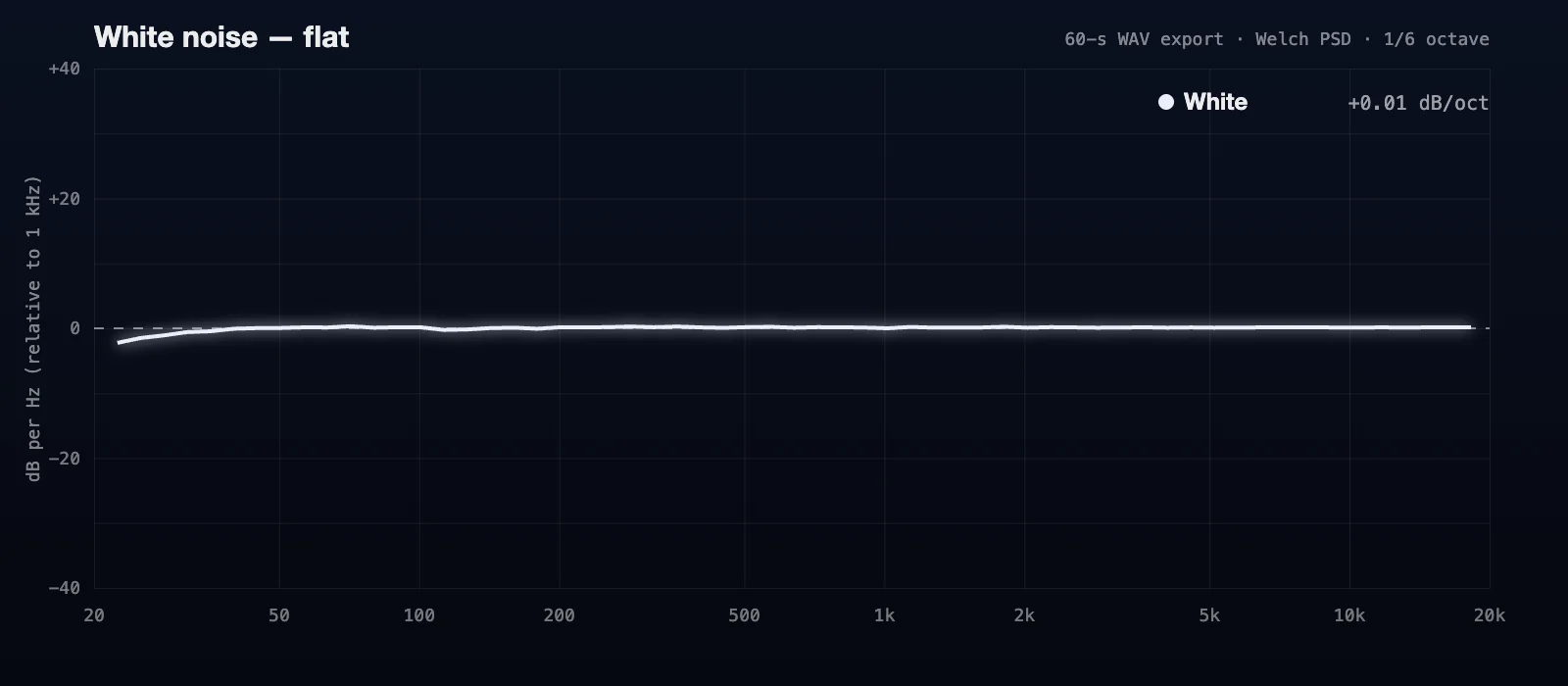
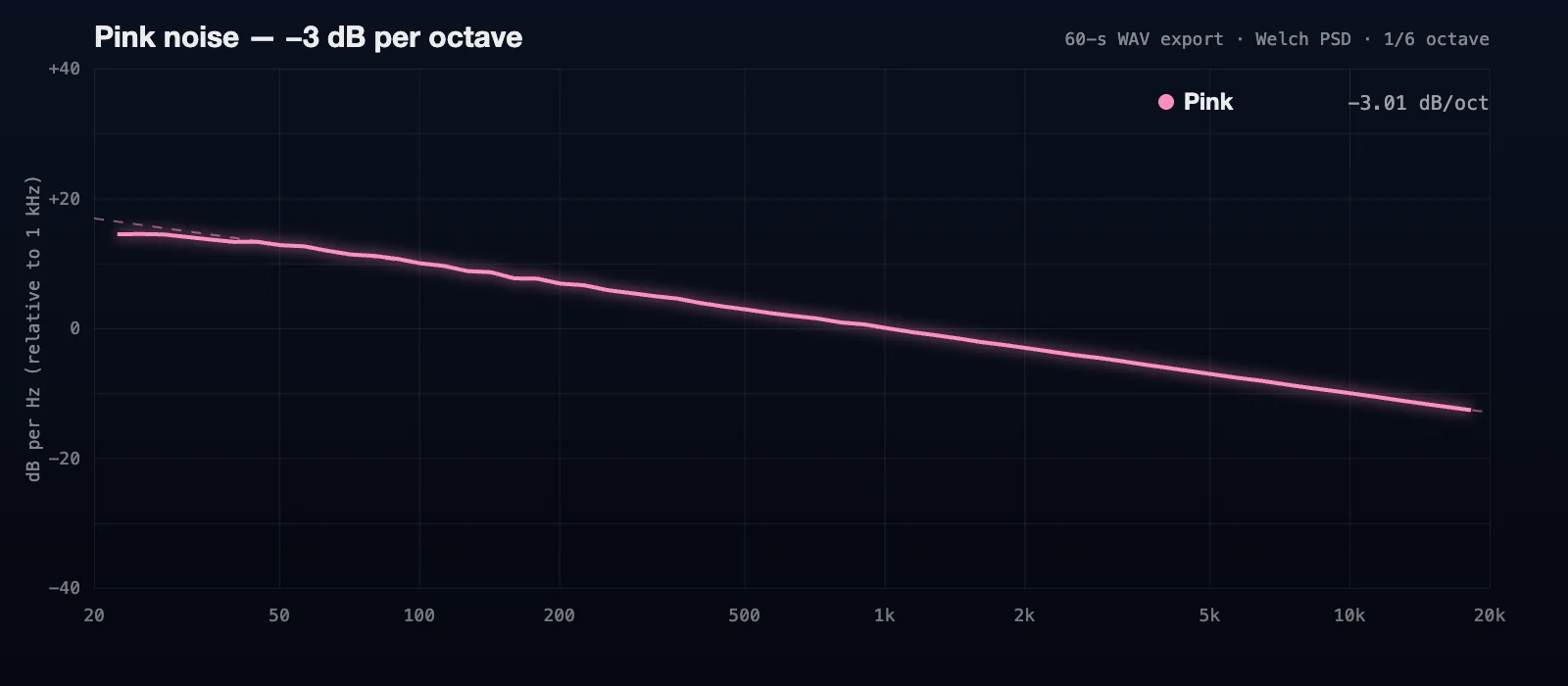
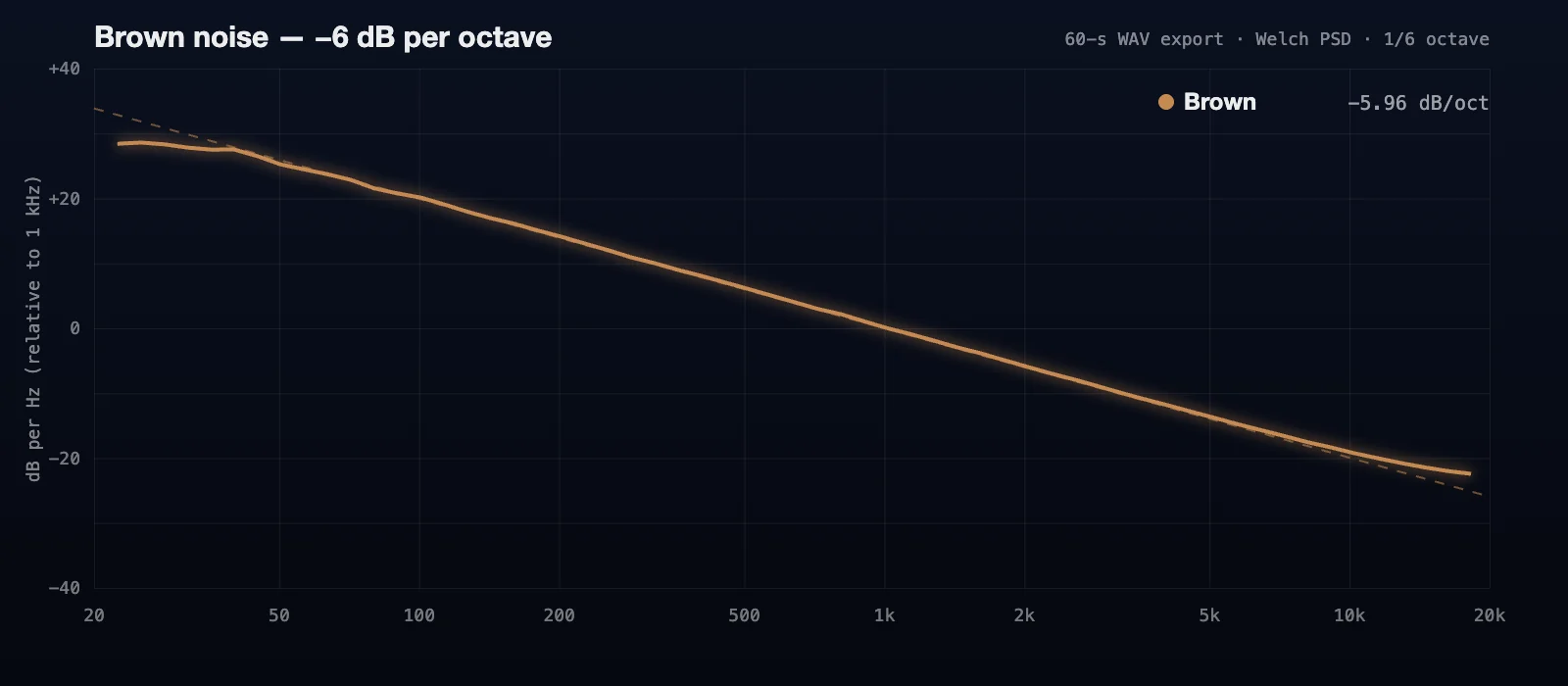
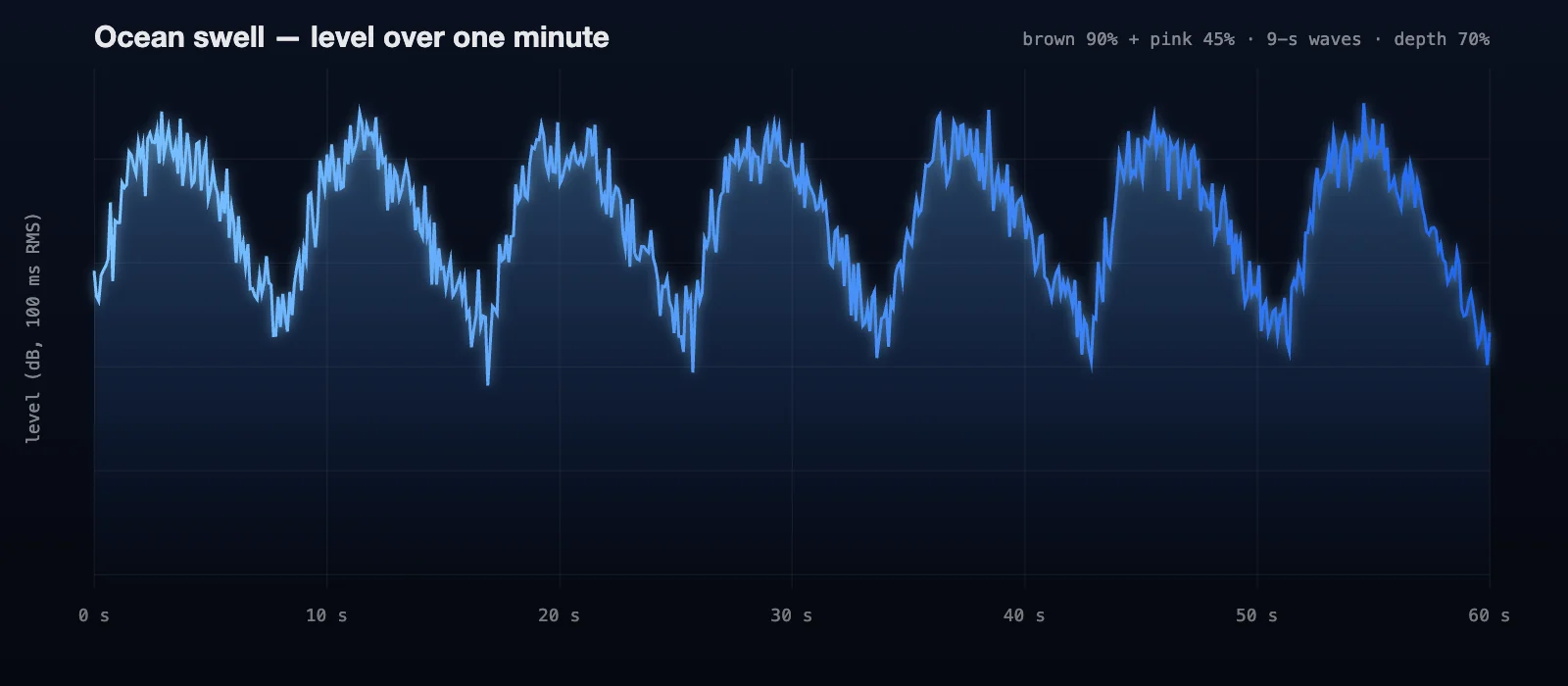
Every clip came out of this tool’s WAV export (12 s, kept quiet for the page). The charts are spectra of 60-second exports, measured with our own code.
White vs pink: drag to compare
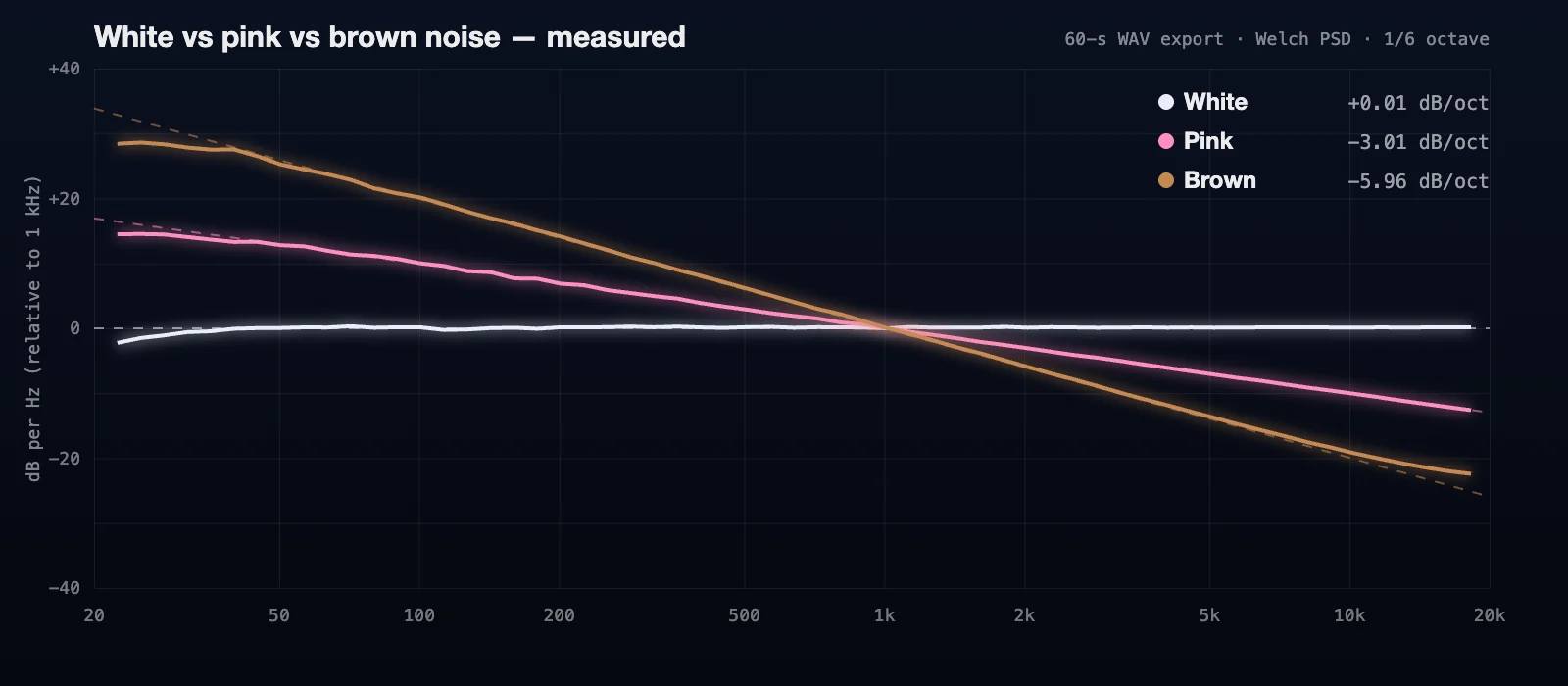
White noise has the same power in every hertz, so each octave up holds twice the energy and it sounds bright. Pink falls 3 dB per octave, which gives every octave the same energy — softer and more even. Our exports measure +0.01 and −3.01 dB per octave.
- +0.01 dB/oct
- −3.01 dB/oct
- 60 s WAV
Brown noise
A leaky integrator with its corner at 20 Hz: −5.96 dB per octave from 100 Hz to 10 kHz. Deep, like a distant waterfall or an aeroplane cabin.
- −5.96 dB/oct
- 20 Hz
- Brown
Ocean swell
Brown 90% and pink 45% with 9-second waves at 70% depth. Level and brightness rise together, then wash back.
- 9 s
- 70%
- Brown + Pink
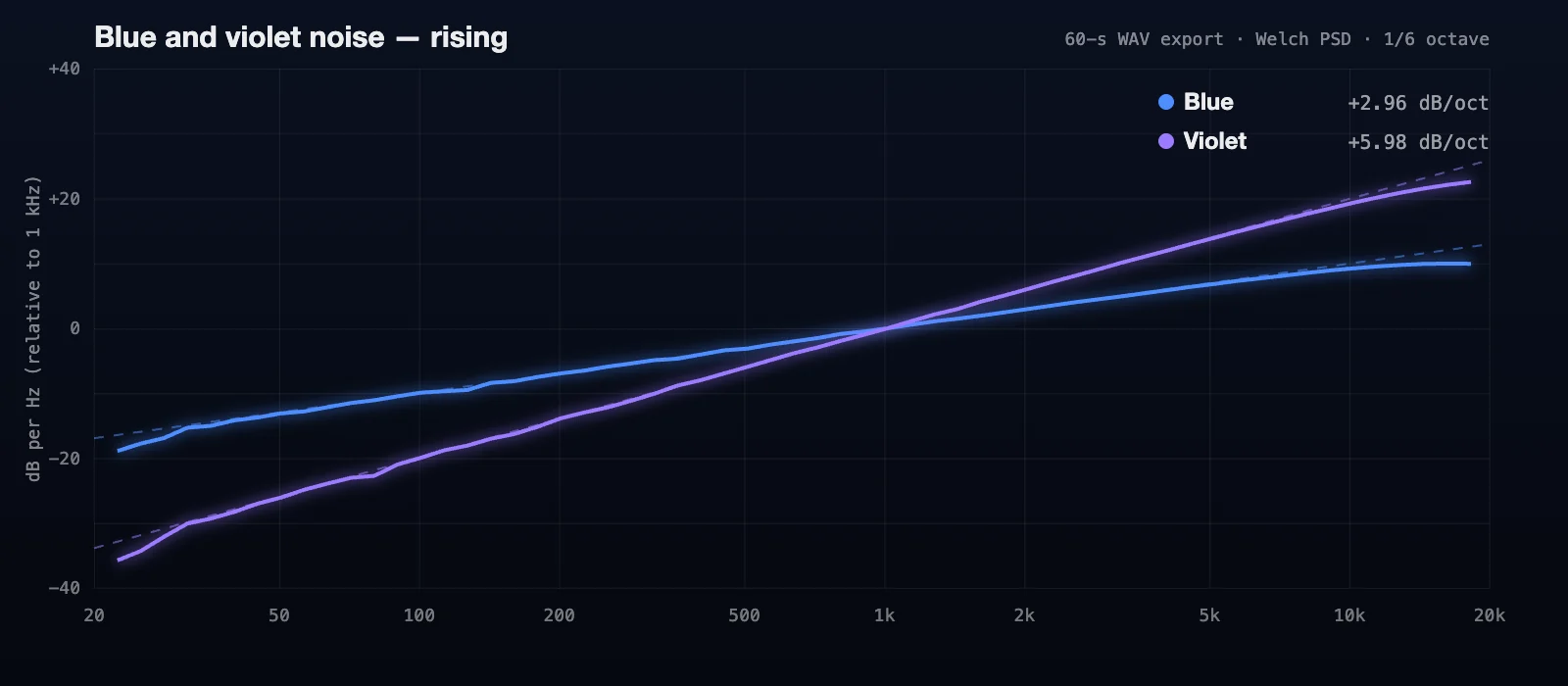
Blue and violet noise
The mirror images of pink and brown: +2.96 and +5.98 dB per octave. Thin and hissy — handy for testing tweeters, rarely for relaxing. The clip is blue.
- +2.96 dB/oct
- +5.98 dB/oct
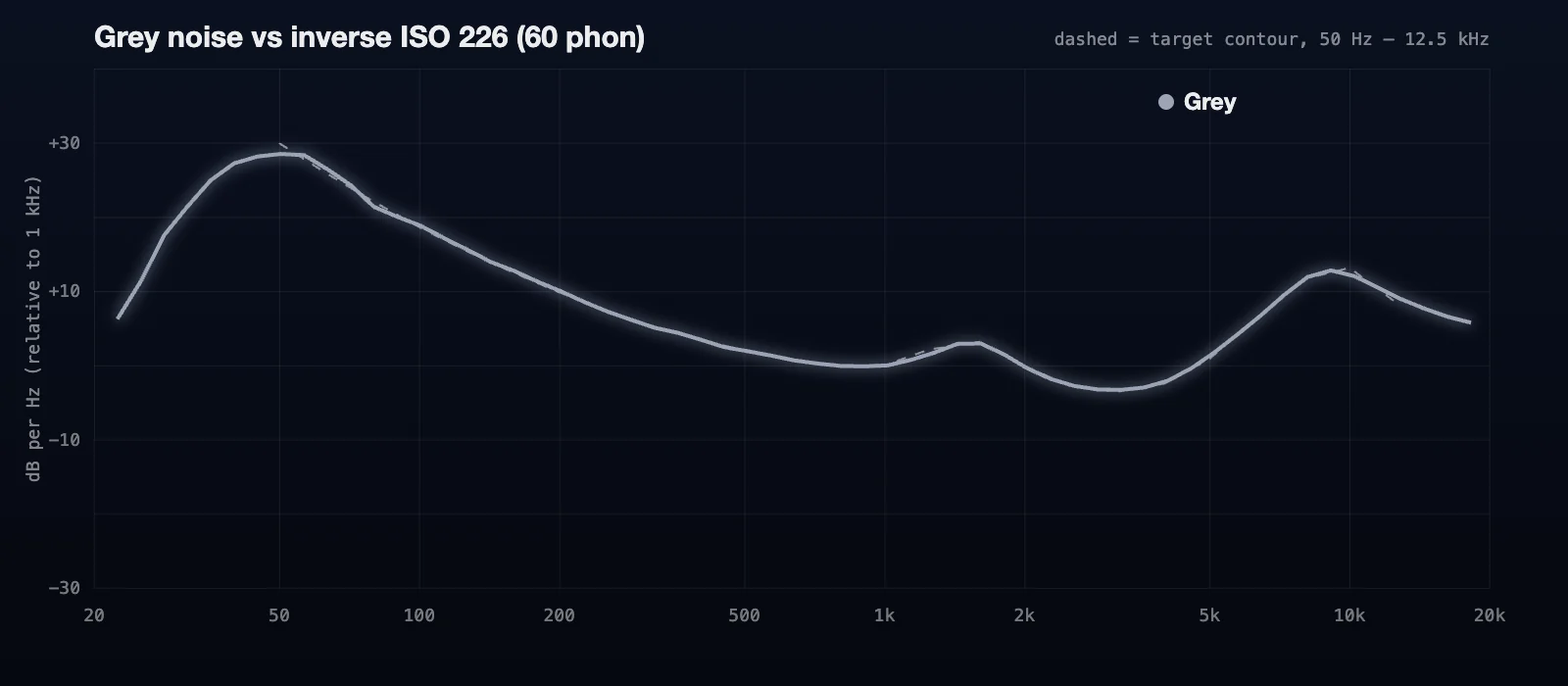
Grey noise
White noise shaped by the inverse of the ISO 226:2003 equal-loudness contour at 60 phon, within ±0.72 dB from 50 Hz to 12.5 kHz: more bass and a dip near 3 kHz.
- ISO 226:2003
- 60 phon
- ±0.72 dB
Need one steady pitch instead of noise? Try our online tone generator. To see any recording’s frequencies over time, open it in the spectrogram viewer.
How it works
How to use the white noise generator
Pick a colour or a preset
Press Play for white noise, tap Pink or Brown, or start from Sleep, Focus, Office or Ocean. Blend colours with the faders.
Shape it and set a timer
Trim rumble with the low cut, soften hiss with the high cut, switch on the swell, and set the sleep timer with a gentle fade.
Listen or download
Leave it playing in the tab — it never loops — or download a WAV (up to 5 minutes free, 60 with Pro) for a phone, a speaker or a video.
Noise colours
White vs pink vs brown noise
The colour of a noise is the tilt of its spectrum, in decibels per octave. We measured our own exports, so the numbers here are ours, not textbook values.
White noise has equal power per hertz. Each octave is twice as wide as the one below, so it holds twice the power, and white noise sounds bright — a hiss like a detuned radio. Plotted per hertz it is a flat line: our 60-second export measures +0.01 dB per octave.
Pink noise falls 3 dB per octave, which halves the power per hertz every octave and leaves each octave with the same total energy. It sounds balanced, like steady rain, and it is the standard test signal for speakers and rooms; ours uses Paul Kellet’s filter and measures −3.01. Brown noise — also called red or Brownian — falls 6 dB per octave into a deep rumble like surf; ours measures −5.96.
Blue and violet rise 3 and 6 dB per octave and sound thin and sharp. Grey noise is not a straight line: it follows an equal-loudness curve, so at a moderate level low, middle and high frequencies seem about equally loud.
Noise colours compared
| Colour | Measured dB/oct | Sounds like | Often used for |
|---|---|---|---|
| +0.01 | Hiss, a fan on high, TV static | Masking sharp sounds, sound-system checks | |
| −3.01 | Steady rain, wind in trees | Background for focus, speaker and room tuning | |
| −5.96 | Surf, a waterfall, an aeroplane cabin | Sleep and relaxing, covering low traffic rumble | |
| +2.96 | Thin hiss, spraying water | Tweeter tests, dithering | |
| +5.98 | Sharp, high hiss | High-frequency tests | |
| ISO 226 | Even and full — more bass than white | A balanced everyday background |
Slopes are least-squares fits from 100 Hz to 10 kHz on 60-second stereo exports at 44.1 kHz. Click a colour to load it.
Use cases
White noise generator for sleeping, focus and the office
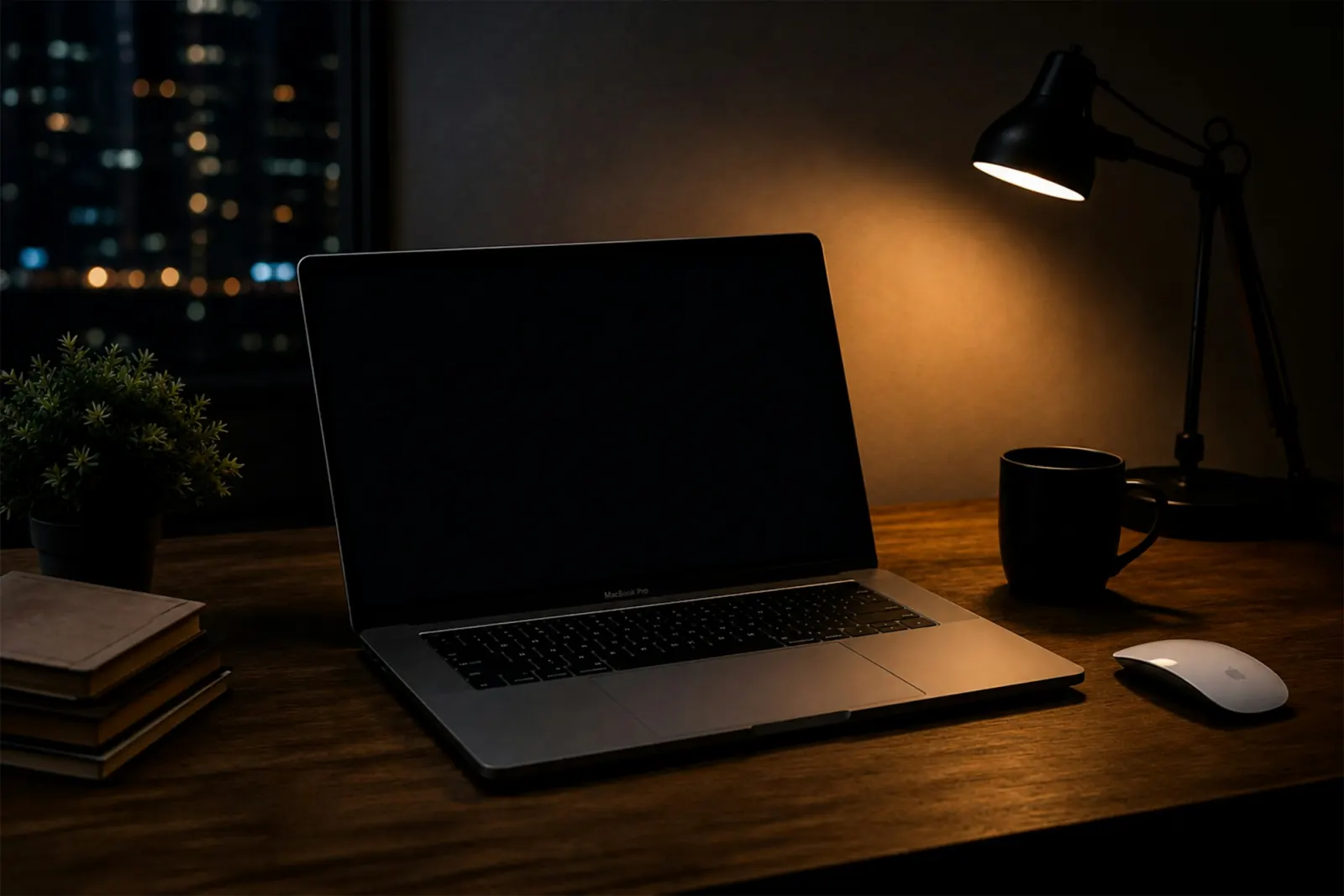
Steady broadband sound covers sudden noises because it fills the quiet they would stand out against. Here is how people set it up.
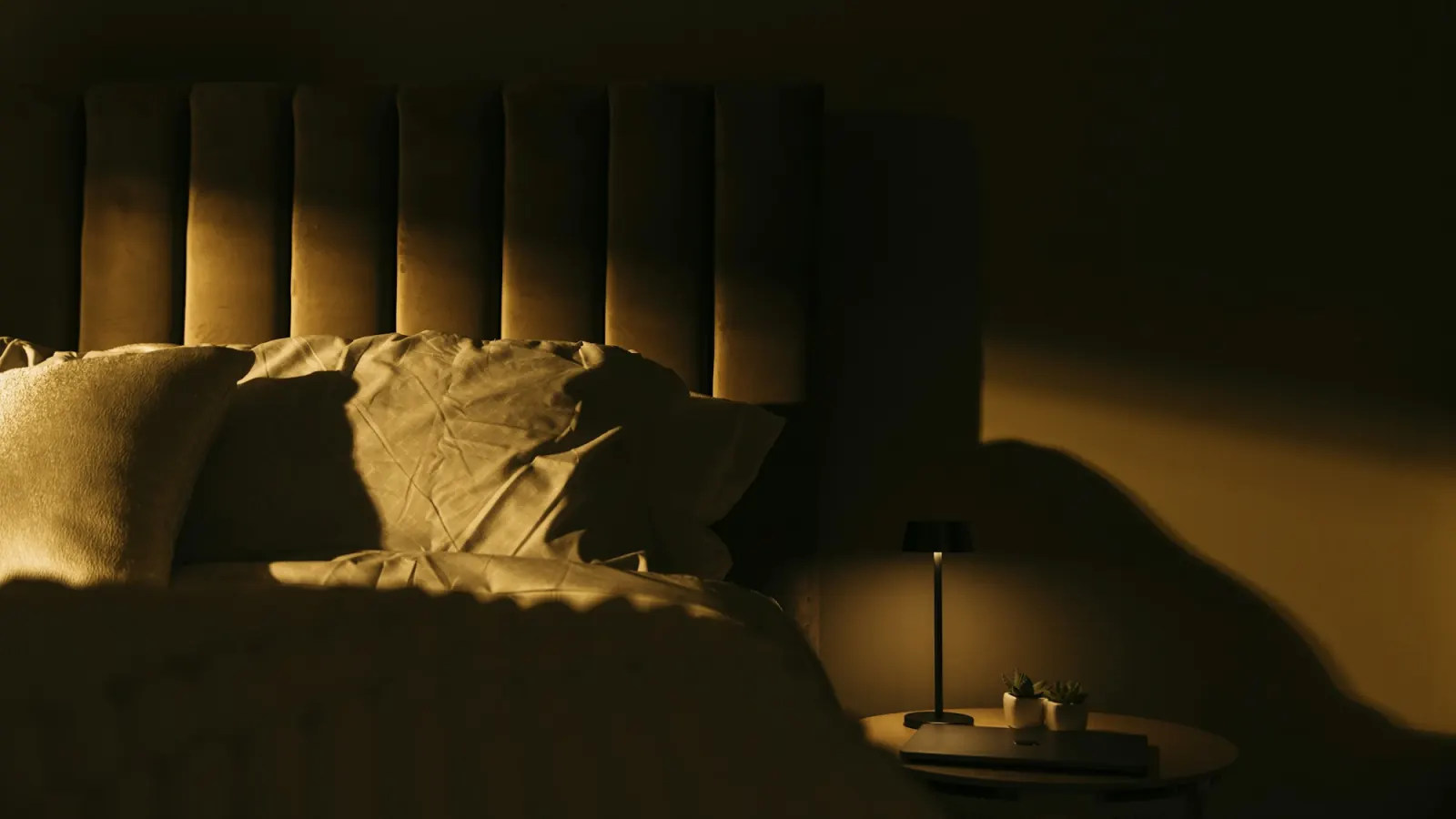
Sleeping
Focus and study

Office masking
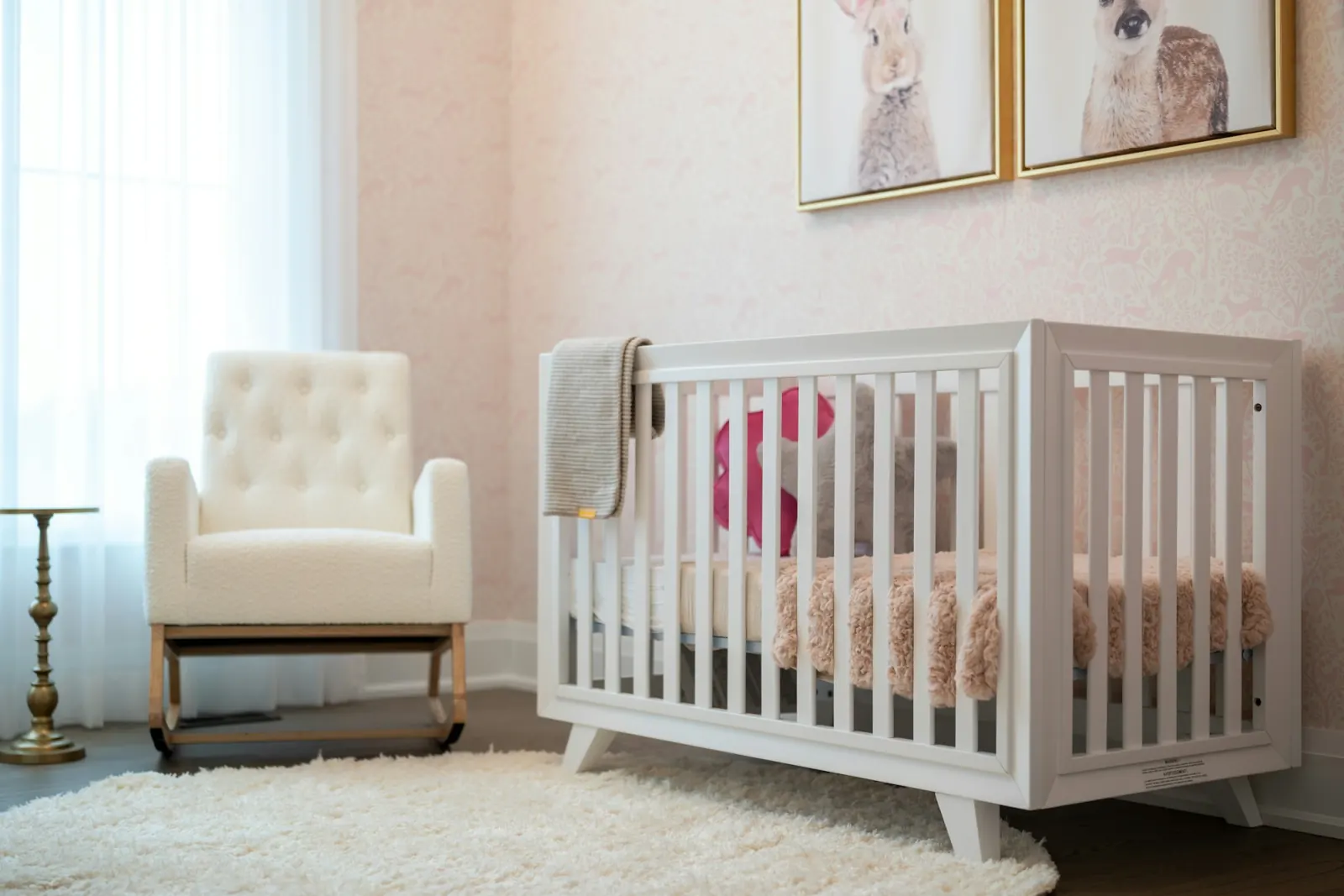
Baby’s room

Relaxing by the ocean

Tinnitus — a soft background
Photos: Unsplash (Unsplash License). Audio clips and charts: made with this tool and measured with our own code.
Listen safely
Safe listening levels for noise
Noise for sleep or focus works at low levels — it only has to cover distractions, not drown them out.
A web page can’t know how loud your speakers or headphones are, so the generator starts at 30% and warns you above 65%. Risk to hearing depends on level and time together: the louder the sound, the shorter the safe time. The figures on the right come from public guidance, checked in November 2026.
Simple rules
Guidance, checked November 2026
| Source | Level | Time |
|---|---|---|
| WHO — safe listening | 80 dB | Up to 40 hours a week for adults; at 90 dB the safe time falls to 4 hours a week |
| WHO-ITU H.870 standard | 75 dB | 40 hours a week — the stricter mode for sensitive listeners such as children |
| NIOSH (CDC) exposure limit | 85 dBA | Averaged over an 8-hour workday; every +3 dB halves the allowed time |
| Pediatrics 2014 sleep-machine study | 50 dBA | Hospital-nursery limit used as the yardstick; all 14 machines tested exceeded it at 30 cm on full volume |
These decibels are sound pressure at the ear, which a web page can’t measure; the volume slider and LUFS figures are digital levels. Information only — not medical advice.
FAQ
White noise generator FAQ
A white noise generator makes random sound with equal power at every frequency — a steady hiss. This one also makes pink, brown, blue, violet and grey noise, lets you blend them, and computes the sound live in your browser, so it never repeats a loop.
The tilt of the spectrum. White is flat (0 dB per octave) and bright; pink falls 3 dB per octave and sounds like rain; brown falls 6 dB per octave and sounds like a deep rumble. Our exports measure +0.01, −3.01 and −5.96 dB per octave.
Many people find a steady sound helps them ignore sudden noises at night, and many prefer pink or brown because they are less hissy. Research is mixed and it doesn’t suit everyone. If you try it, keep it quiet, use the sleep timer, and talk to a doctor about ongoing sleep problems.
Yes. Choose a length — up to 5 minutes free, or up to 60 with Pro — and press Download WAV. A loop-ready file crossfades its last two seconds into its first two, so a player set to repeat plays it without a seam. A 60-minute stereo WAV is about 635 MB; mono halves that.
Only loud enough to cover the sounds that bother you. WHO’s guidance is that 80 dB is safe for up to 40 hours a week for adults; noise for sleep should be far quieter than that, and for a baby the speaker belongs across the room. The generator starts at 30% and warns you above 65%.
Nothing is uploaded — the noise is made in your browser — and it works in current mobile browsers. Some phones pause web audio when the screen locks, so for all-night use a downloaded loop-ready WAV in a music app is more reliable.
Make your noise
Pick a colour, keep the volume low and set the timer — or download a loop-ready WAV.
Free · no signup · no watermark · processed in your browser