Play
Steady 120 BPM in 4/4
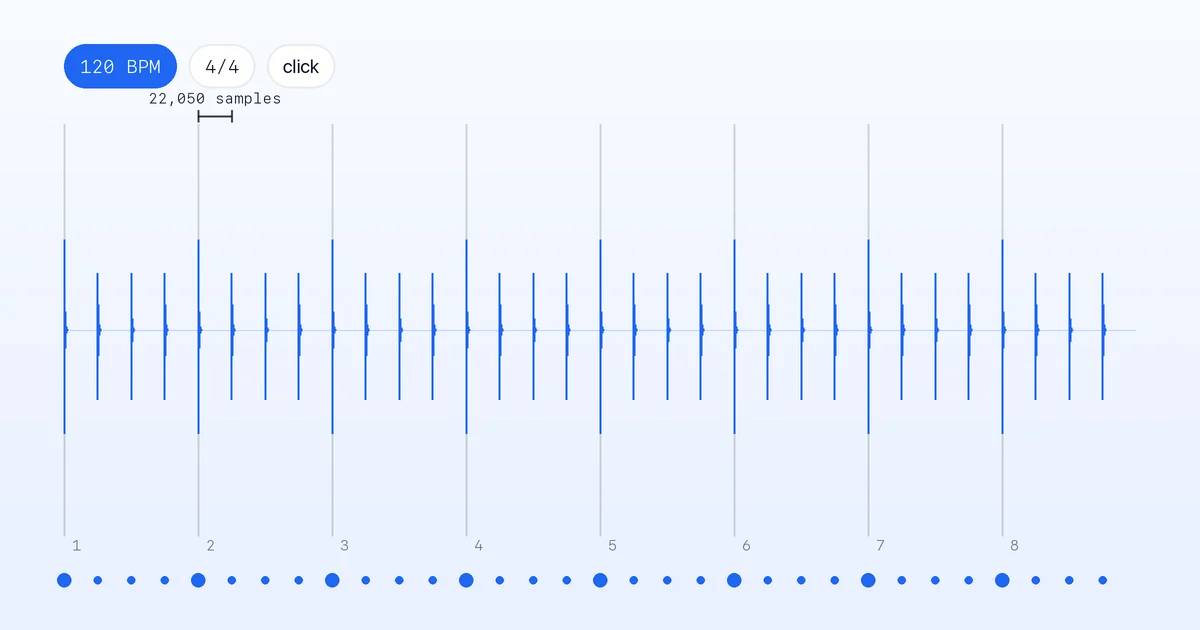
♩ = 120 · 4/4 · click · 8 bars
The downbeat is higher and louder. We measured all 32 onsets in the exported WAV: one every 22,050 samples (0.5 s at 44.1 kHz), with zero samples of jitter.
This free online metronome keeps sample-accurate time right in your browser. Set 20–300 BPM, pick 4/4, 6/8 or 7/8, accent or mute any beat, add subdivisions, and practise with a speed trainer and muted bars. Press Space to start.
Bar –0:00
♩ =120BPM
Allegro
Click a beat: accent → normal → mute.
Tempo
20–300Time signature
Subdivision
Sound
Speed trainer
Raise the tempo step by step while you play.
Off · starts at the From tempo
Muted bars
Play some bars, then the click drops out. Keep the beat yourself.
Off
?bpm=120&sig=4/4Examples
Five setups exported with the click-track button. The pictures are the real waveforms of the files you hear: every click lands on its exact sample.
♩ = 120 · 4/4 · click · 8 bars
The downbeat is higher and louder. We measured all 32 onsets in the exported WAV: one every 22,050 samples (0.5 s at 44.1 kHz), with zero samples of jitter.
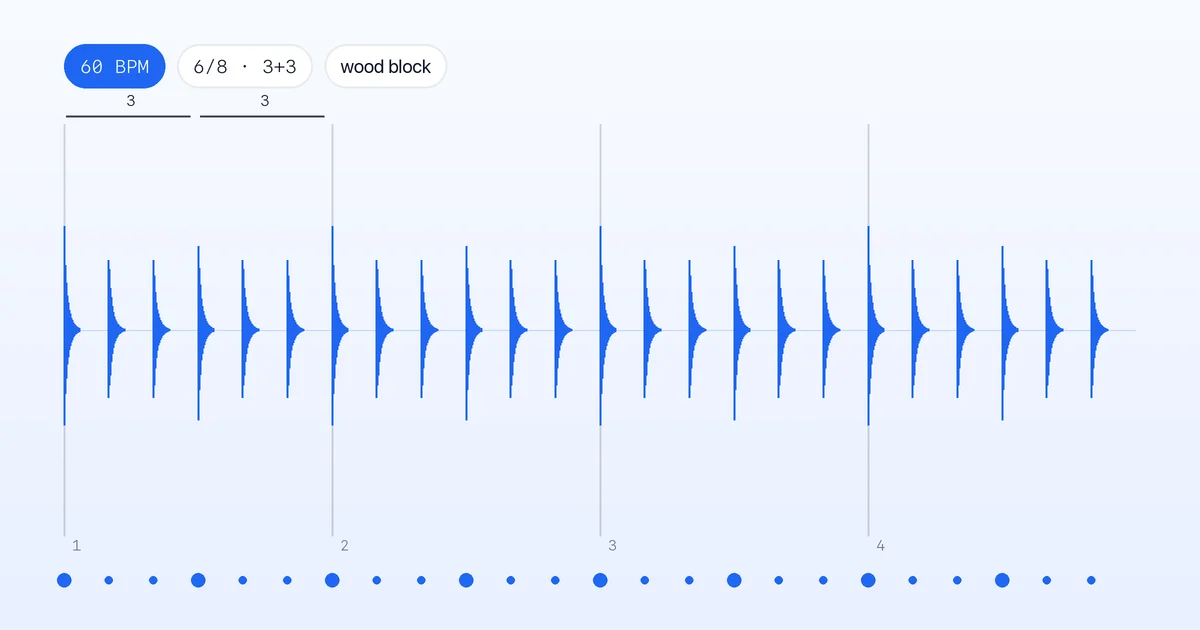
6/8 · 3+3 · wood block
Six eighth-note clicks per bar, accented on 1 and 4: the two big beats you feel in 6/8.
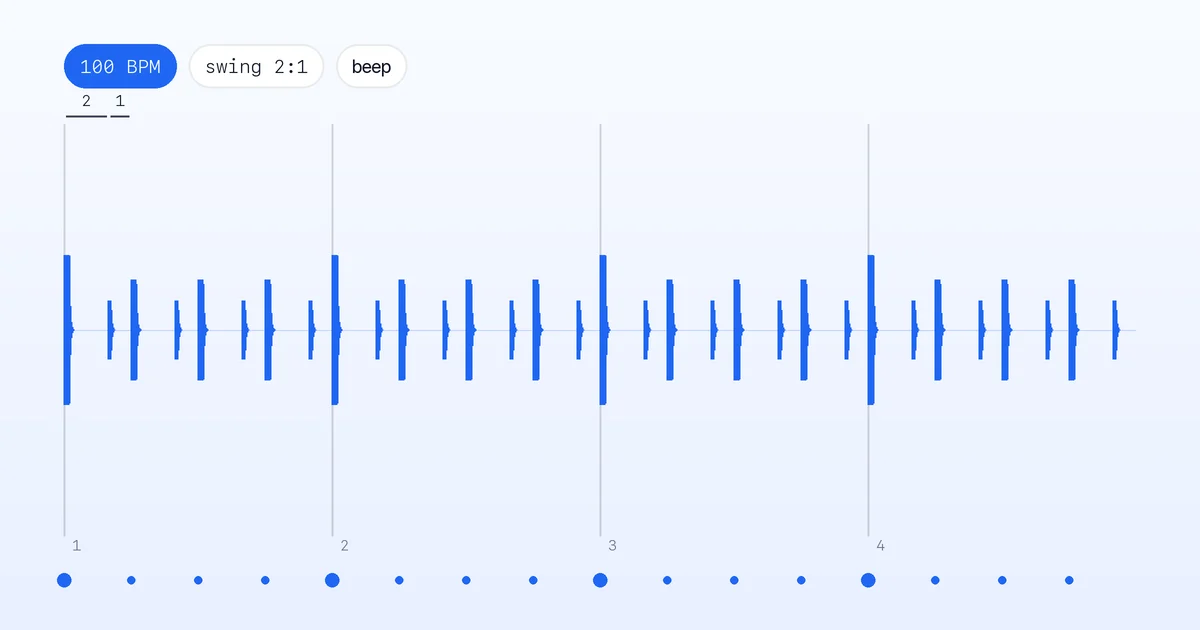
♩ = 100 · swing 2:1 · beep
Each beat is split long–short in a 2:1 ratio, the triplet swing behind shuffles and jazz.
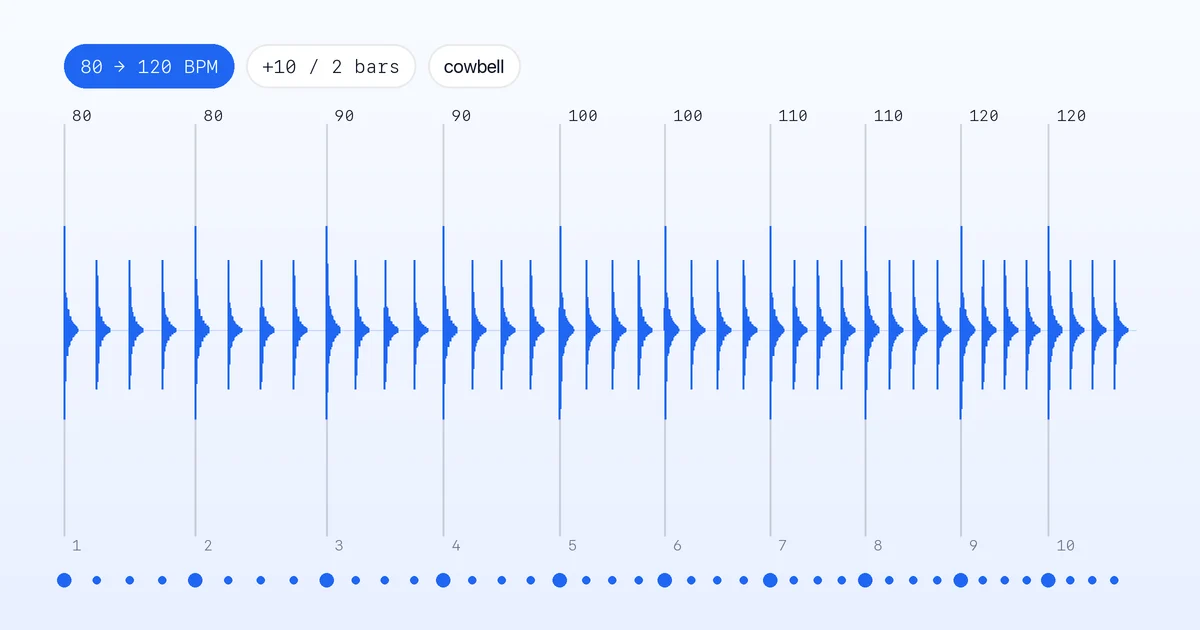
+10 BPM every 2 bars · cowbell
The tempo climbs 10 BPM every two bars, then holds at the target. For real practice, use smaller steps (+2 to +5).
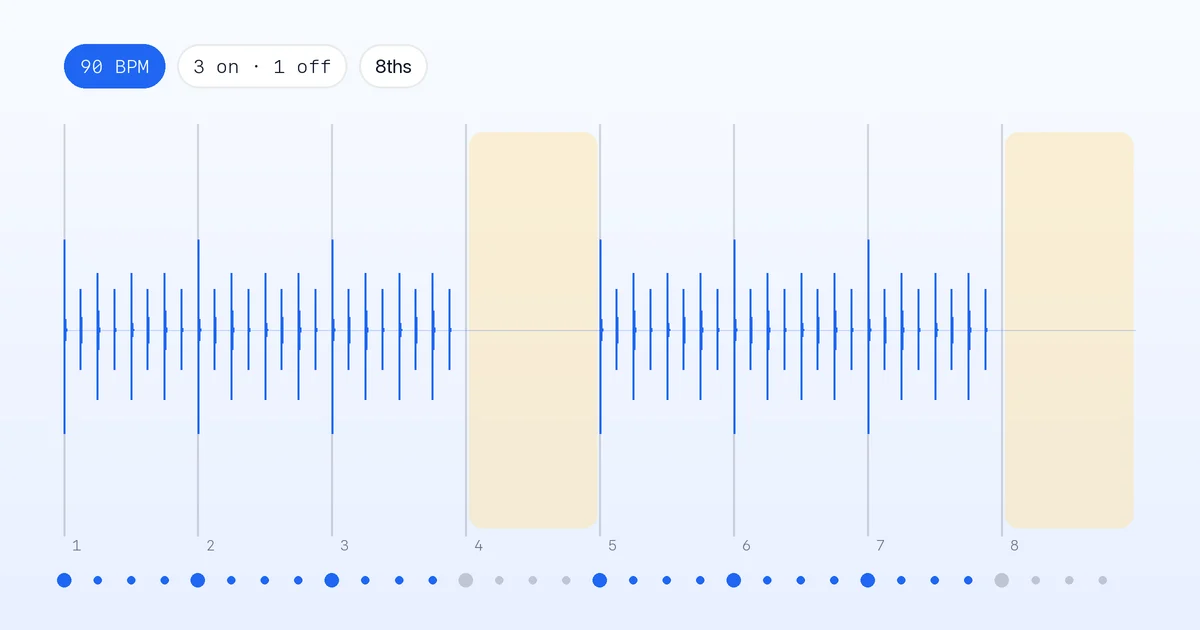
♩ = 90 · 8ths · 3 + 1 bars
Three bars with the click, one bar of silence. If you land on beat 1 when it comes back, your inner pulse held.
How to use it
Drag the slider, type a BPM, pick a preset or tap T along with a song. ← → change it by 1 BPM, ↑ ↓ by 5.
Pick 4/4, 6/8, 7/8 or another metre, then click a beat to make it accented, normal or silent. Add 8ths, triplets, 16ths or swing.
Start and stop with Space. Turn on the speed trainer or muted bars, or download the same pattern as a WAV click track.
Features
Use this metronome online with nothing to install and nothing uploaded: everything runs in your browser.
JavaScript timer (setInterval)
Audio clock (this metronome)
booked ~120 ms ahead
Practice guide
Find the tempo where you can play a passage cleanly three times in a row, practise there, then raise it in small steps. The click tells you when you rush or drag; these routines turn that into progress.
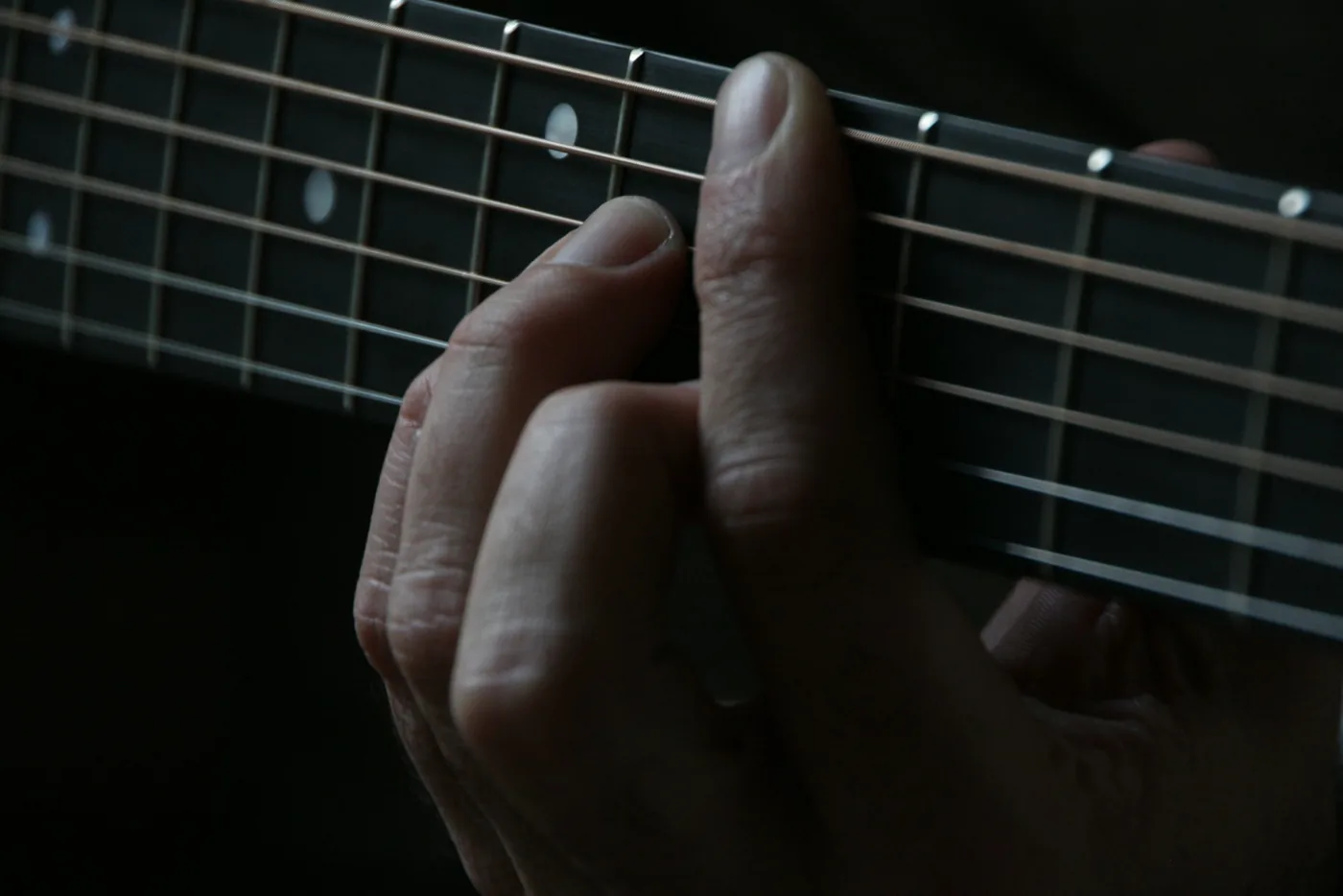 ♩ = 70 · 8ths
Strumming and picking get tighter when the click marks the subdivision you’re playing.
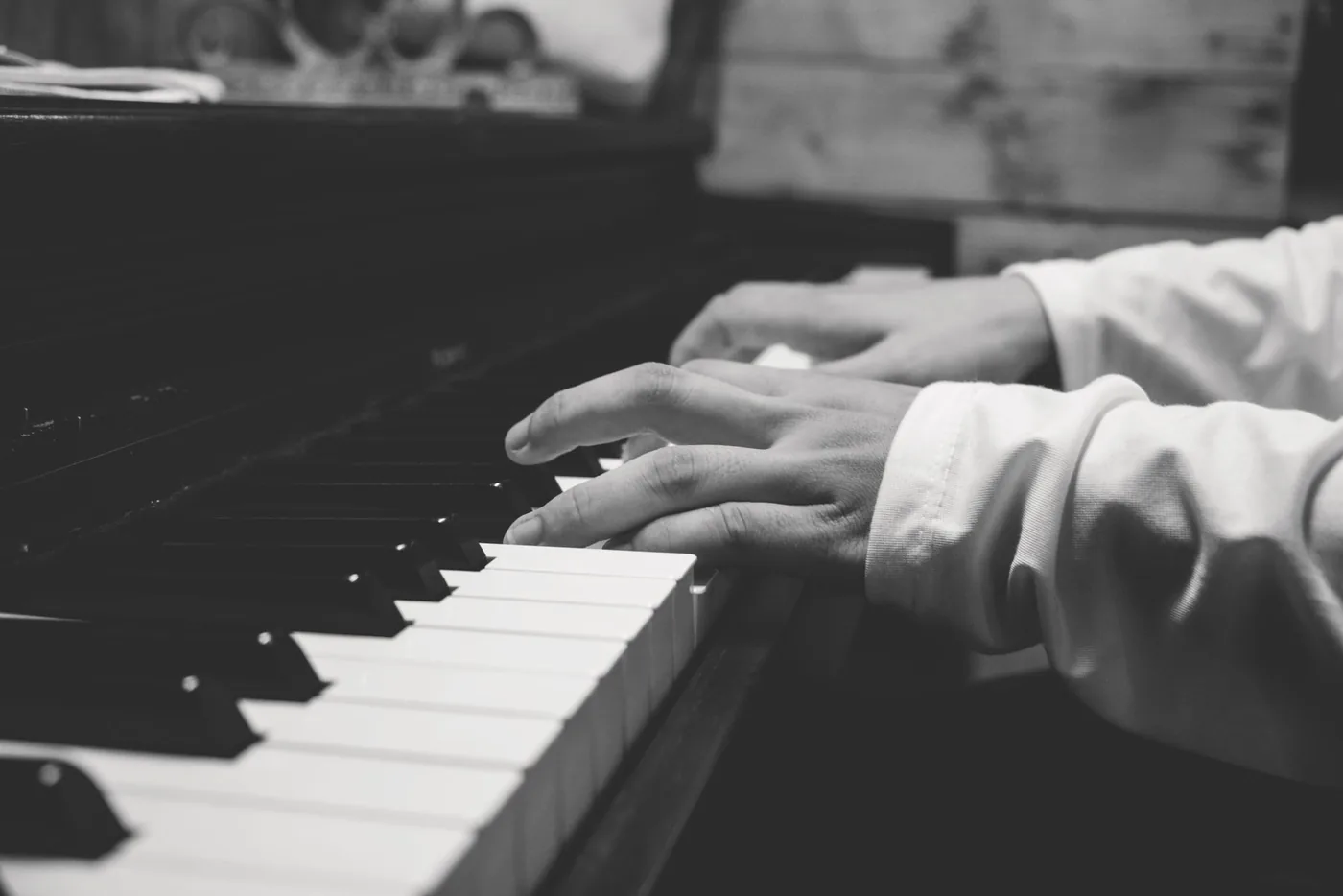 ♩ = 80 · 16ths
Use the click to keep runs even and to stop the tempo creeping up in the easy bars.
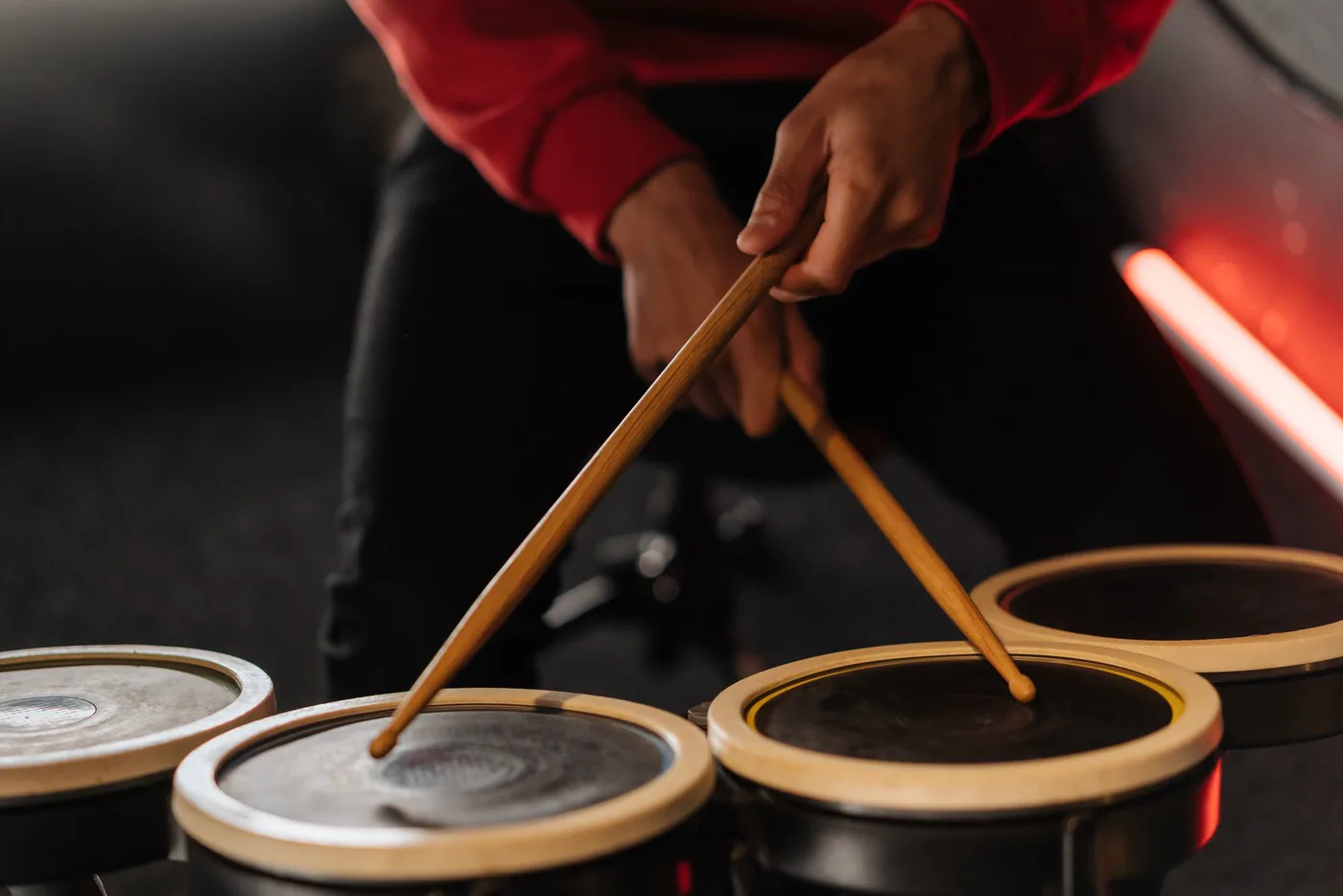 ♩ = 100 · 2 & 4
Drummers keep time for everyone else, so practise grooves and fills against the click.
Practising along with a recording? Find its tempo with the BPM tapper, then slow it down without changing the pitch in the audio speed changer.
Common tempos
Four tempos most people start from: what each one feels like and one way to use it.
One click per second, so it doubles as a clock. A normal adult resting heart rate is 60–100 beats per minute (American Heart Association).
Practice use: slow practice of a new passage, long tones for singers and wind players, and counting rests in seconds.
A relaxed groove. Ed Sheeran’s “Thinking Out Loud” sits at about 79 BPM, and many ballads and hip-hop beats live around here.
Practice use: scales in 16ths. At 80 BPM that’s 320 notes a minute, a solid first goal for alternate picking or piano runs.
The American Heart Association asks for 100–120 chest compressions a minute in CPR and names “Stayin’ Alive” (about 104 BPM in song databases) as a guide.
Practice use: a mid-tempo pop and funk pocket, good for strumming patterns and 8th-note grooves.
Exactly two beats a second. It’s the default tempo of new projects in Logic Pro and GarageBand, and US Army quick time is 120 steps a minute.
Practice use: click tracks for recording, march and dance tempos, and checking that an Allegro passage isn’t rushing.
Compound time
6/8 has six eighth notes in a bar, grouped 3 + 3, so you feel two big beats, on 1 and 4, each a dotted quarter. 3/4 also holds six eighths but groups them 2 + 2 + 2: three beats. That’s why this metronome accents 1 and 4 in 6/8 and only 1 in 3/4.
Music in 6/8 usually marks the dotted quarter (♩. = 60). Choose ♩. under “BPM counts” to type that number, or ♪ to count every eighth note instead.
| ♩. = 60 | ♪ = 180 |
| ♩. = 80 | ♪ = 240 |
| ♩. = 100 | ♪ = 300 |
Tempo markings
Italian tempo words describe a character, not an exact speed. The label under the BPM in the tool uses these ranges.
| Marking | Meaning | BPM | ▶ |
|---|---|---|---|
| Larghissimovery, very slowly | ≤ 24 | ||
| Graveslow and solemn | 24–40 | ||
| Largobroadly | 40–66 | ||
| Lentoslowly | 40–60 | ||
| Larghettorather broadly | 44–66 | ||
| Adagioslowly, at ease | 44–66 | ||
| Andanteat a walking pace | 56–108 | ||
| Moderatoat a moderate speed | 108–120 | ||
| Allegrettomoderately fast | 112–120 | ||
| Allegrofast and bright | 120–156 | ||
| Vivacelively and fast | 156–176 | ||
| Prestovery fast | 168–200 | ||
| Prestissimofaster than presto | ≥ 200 |
Ranges as listed in Wikipedia’s “Tempo” article, checked November 2026. They’re rough, they overlap, and composers use them loosely, so treat them as starting points.
Play along
Well-known recordings and their tempos. Press play to start the metronome at that BPM, then count along with the track.
| Song | Artist | BPM | Metre | ▶ |
|---|---|---|---|---|
| PerfectEd Sheeran | ♩. ≈ 63 | 12/8 | ||
| Thinking Out LoudEd Sheeran | 79 | 4/4 | ||
| Shape of YouEd Sheeran | 96 | 4/4 | ||
| Stayin’ AliveBee Gees | 104 | 4/4 | ||
| Rolling in the DeepAdele | 105 | 4/4 | ||
| Uptown FunkMark Ronson ft. Bruno Mars | 115 | 4/4 | ||
| Billie JeanMichael Jackson | 117 | 4/4 | ||
| Don’t Stop Believin’Journey | 119 | 4/4 | ||
| Seven Nation ArmyThe White Stripes | 123–124 | 4/4 | ||
| Blinding LightsThe Weeknd | 171 | 4/4 | ||
| Take FiveThe Dave Brubeck Quartet | ≈ 174 | 5/4 |
Tempos from songbpm.com and Tunebat, checked November 2026. Recordings drift a little, and some sites list half- or double-time values.
Basics
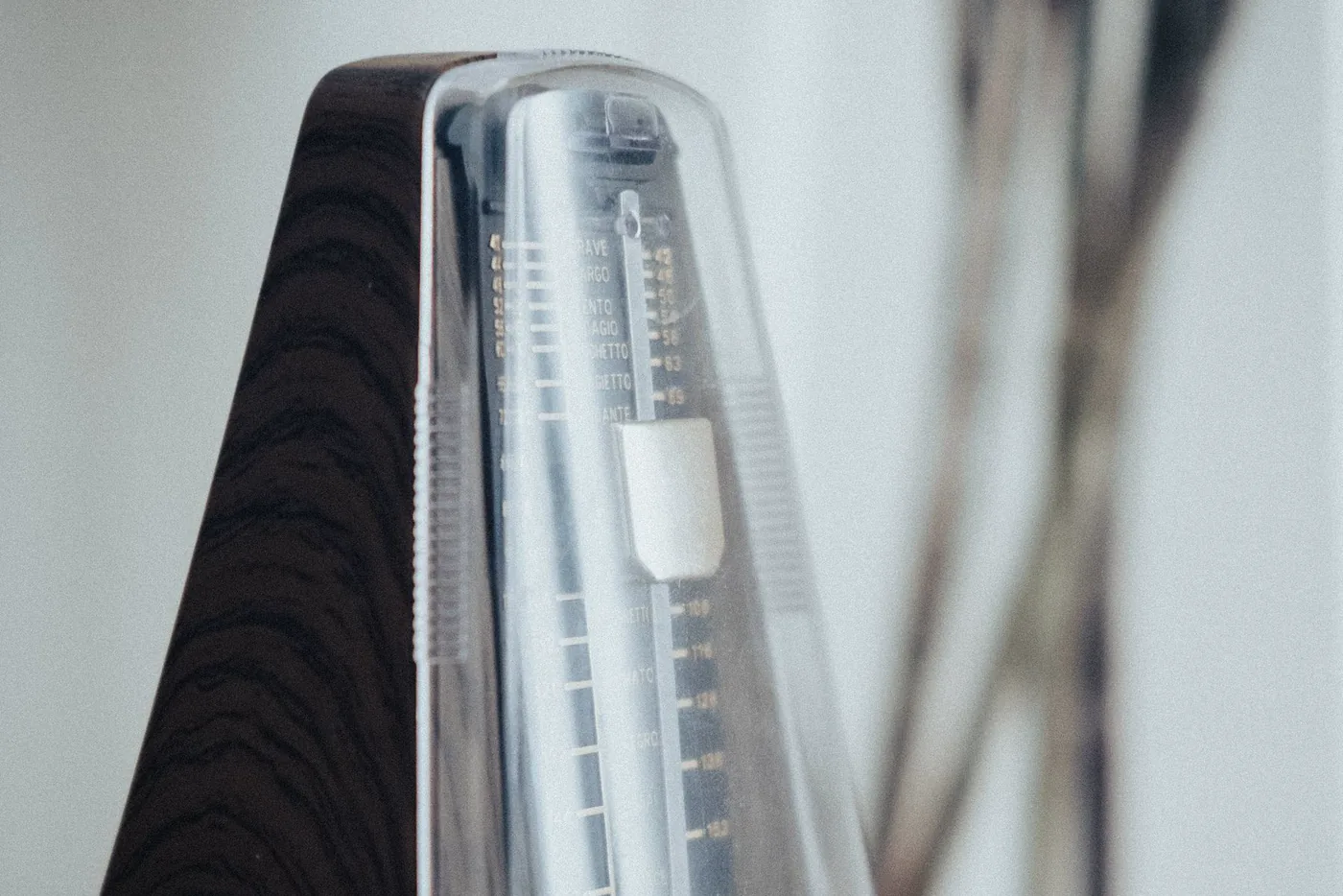
A metronome is a device that clicks at a steady, adjustable rate, measured in beats per minute (BPM), so musicians can practise and play in time. Composers mark tempos for it, and teachers use it to build an even rhythm.
A short history
Mechanical, digital, online
Use cases
Anyone who has to keep a steady count, with or without an instrument.
 ♩ = 120 · 4/4
 ♩ = 72 · 3/4
 ?bpm=80&sig=3/4
FAQ
Yes. Clicks are scheduled ahead on the Web Audio clock, which is sample-accurate, instead of being fired by JavaScript timers. We exported 8 bars at 120 BPM and measured every onset exactly 22,050 samples apart (0.5 s at 44.1 kHz). Live, the click doesn’t drift; your device’s audio output only adds a small, constant delay.
Pick 6/8 under Time signature: it clicks six eighth notes with accents on 1 and 4. Under “BPM counts”, choose ♩. to enter the dotted-quarter tempo printed on most 6/8 music, or ♪ to count every eighth note.
Start at a tempo where you can play the passage cleanly three times in a row, often 60–80 BPM, then raise it 2–5 BPM at a time. The speed trainer can do the raising for you.
Yes. Set the number of bars and press WAV (16-bit, 44.1 kHz) or MP3 (192 kbps). The file starts on beat 1, includes your accents, subdivisions, trainer ramp and muted bars, and is exactly that many bars long, so it loops in a DAW. Free click tracks run up to 5 minutes; Pro goes up to 60.
Yes. A worker timer keeps scheduling while the tab is hidden, and the look-ahead grows to 1.2 s so the click carries on. Phones may still pause audio when the screen locks.
Yes. The address updates as you change the BPM and time signature, for example ?bpm=120&sig=6/8. Send it, or press Copy link, and it opens with the same settings.
Free, no sign-up, nothing to install.
Free · no signup · no watermark · processed in your browser