
The short answer
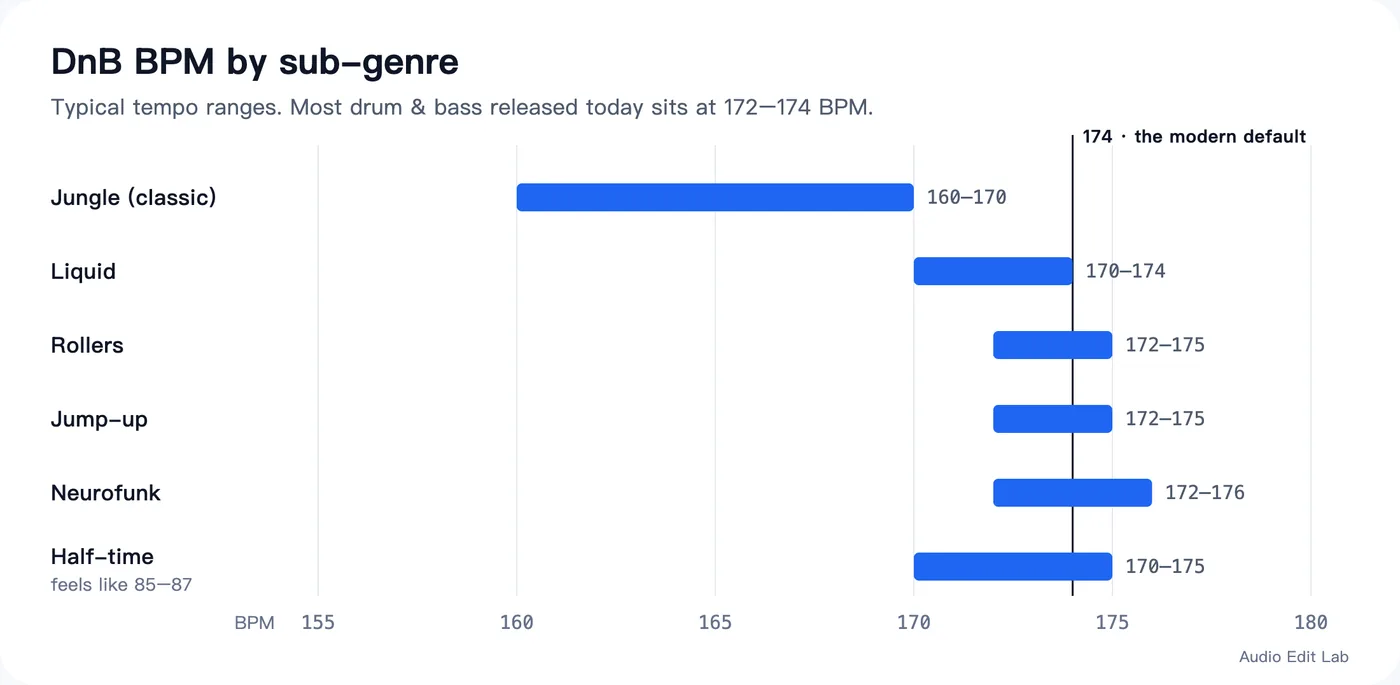
174 BPM. Almost all drum & bass released today sits between 170 and 175 BPM, most of it at 172–174. Jungle, the genre DnB grew out of, sits lower at about 160–170.
What BPM is drum and bass?
Drum & bass grew out of UK jungle in the early-to-mid 1990s. Jungle producers sped up sampled funk breakbeats — the Amen, Think and Apache breaks — into the 160s, and as the sound turned into drum & bass the tempo crept up into the 170s. By the 2000s 172–176 was normal; today 174 is the default in countless project templates and the number DJs set their decks to.
What hasn't changed is the shape: fast, syncopated drums over a slow, heavy bassline. Drums moving at 174 while the bass moves at half that pace is what makes DnB feel urgent and laid-back at the same time.
DnB BPM by sub-genre
Sub-genres differ far more in sound design than in tempo, so read these as typical ranges, not rules.
| Sub-genre | Typical BPM | What it sounds like |
|---|---|---|
Jungle (classic) | 160–170 | Chopped Amen breaks, ragga vocals, deep sub-bass |
| Liquid | 170–174 | Soulful chords, vocals, smooth rolling drums |
| Rollers | 172–175 | Hypnotic and stripped back, long build-ups |
| Jump-up | 172–175 | Bouncy, wobbling bass riffs and big drops |
| Neurofunk | 172–176 | Dark, technical, heavily processed bass |
| Half-time | 170–175 (feels 85–87) | Snare on beat 3, lots of space, heavy bass |
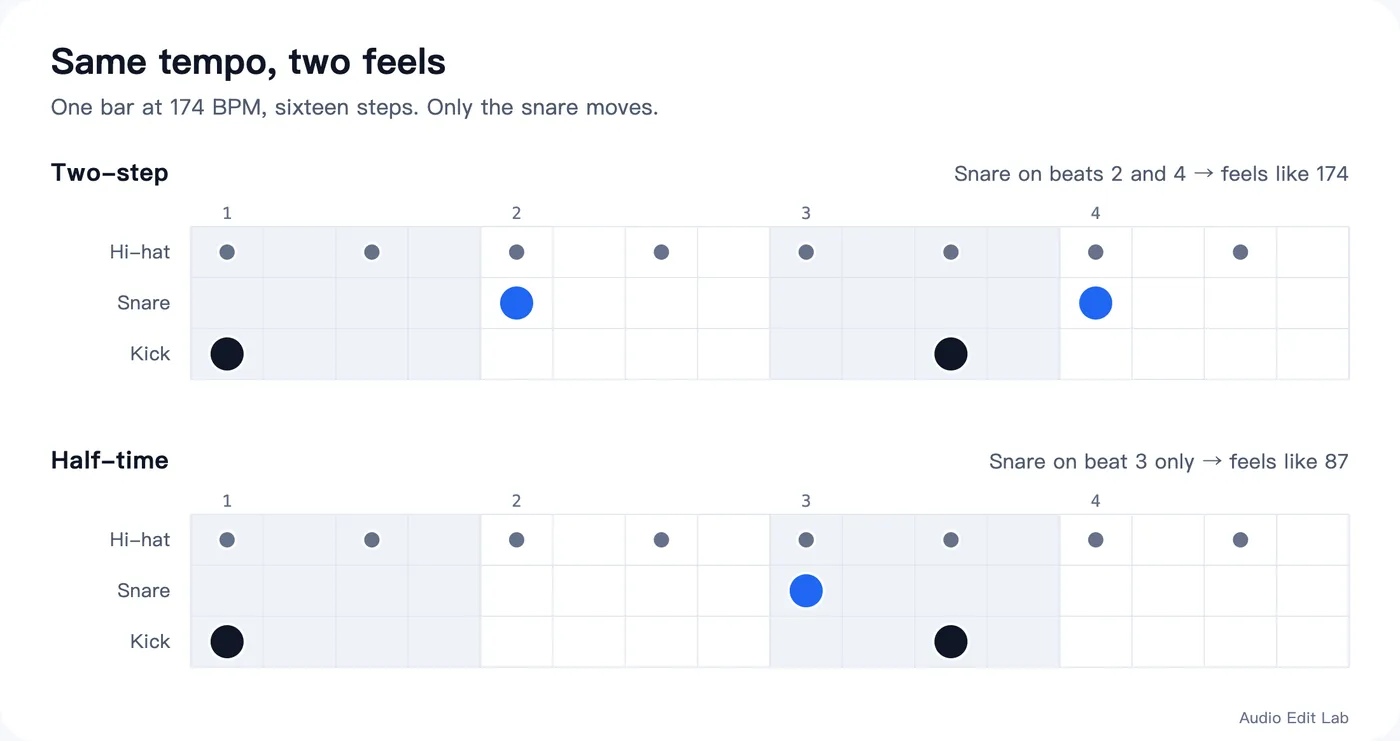
Why DnB can feel like 87 BPM
In the standard "two-step" DnB beat, the kick lands on beat 1 and just after beat 3, and the snare cracks on beats 2 and 4 of a 174 BPM bar. Your body tends to lock onto the slow bassline and the long gaps between snares, so many people nod along at half speed — 87 BPM. It's also why BPM detectors sometimes report 86–88: they've caught the half-time pulse.
Half-time DnB takes the idea further. The snare moves to beat 3, so each bar has a single backbeat. The tempo is still 174 — hi-hats and percussion keep the fast grid — but the groove now sits at 87, leaving room for slower, heavier bass.
How to find a track's BPM
- 1
Tap along to the snare
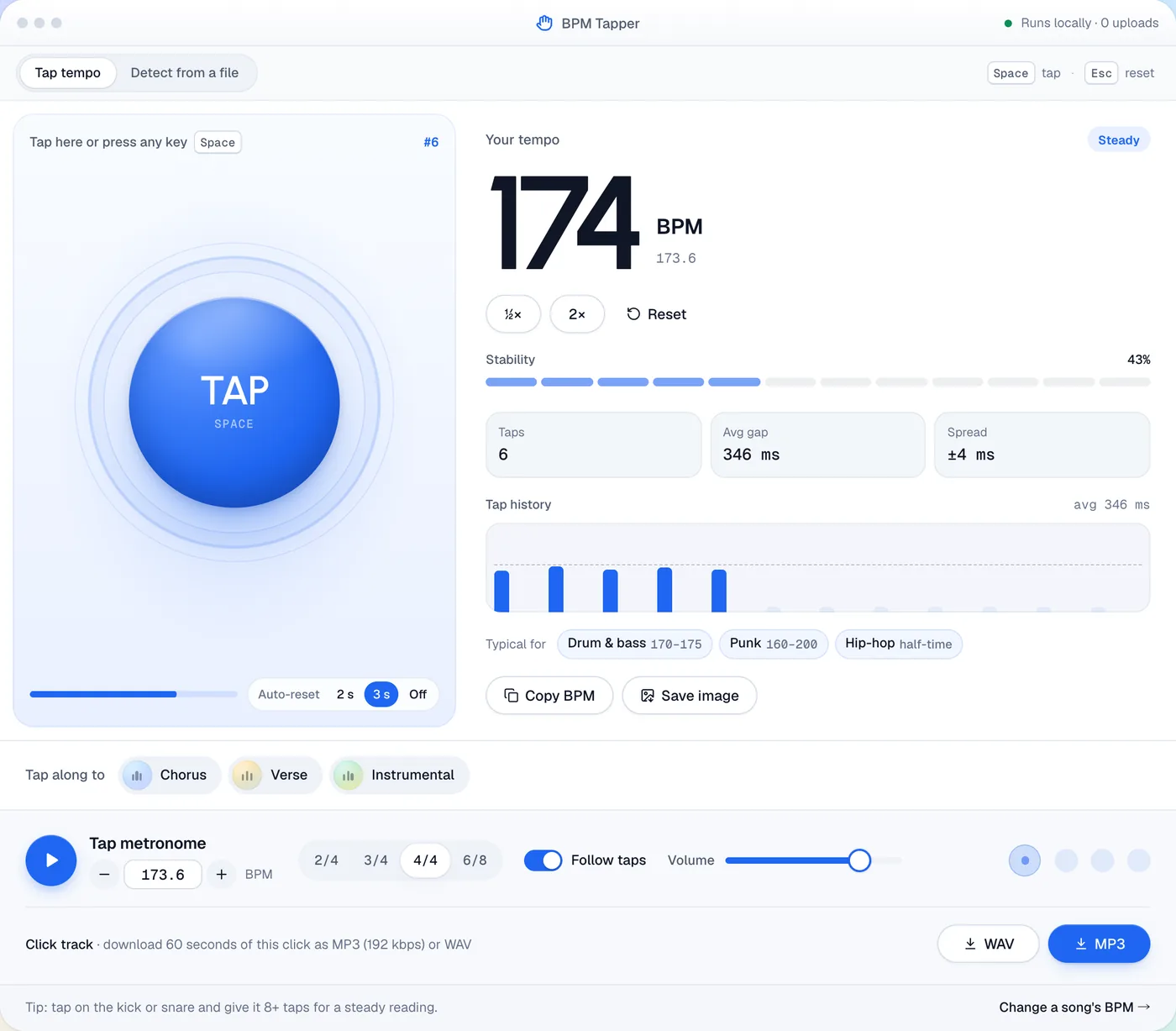
Open the BPM Tapper, play the track and tap Space on every snare for 8–16 hits. Snares on beats 2 and 4 give you about 174; the single snare of a half-time track gives about 87.
- 2
Or let it read the file
The tapper's Detect from a file tab analyses the drums of an audio file right in your browser.
- 3
Sanity-check the octave
A result of 85–88 means you caught the half-time pulse — double it. Above 180, you probably tapped the hi-hats — halve it.
- 4
Confirm on the grid
In your DJ or production software, set the grid to that BPM and check the first kick of the drop lands on a downbeat.
How to mix DnB
Drum & bass is one of the friendliest genres to mix, because nearly every track is already within a few BPM of 174.
- 1
Lock both decks to one tempo
174 is a safe house tempo. Nudges of ±2 % — about ±3 BPM — are hard to hear; keep key lock on if you push further.
- 2
Count in phrases
DnB is built in 8-, 16- and 32-bar blocks. Start the incoming track so its intro ends exactly as the outgoing track's drop or breakdown finishes.
- 3
Swap the bass, don't stack it
Two basslines at once turn to mud. Keep the incoming track's low EQ cut, then swap the lows on a phrase change.
- 4
Try a double drop
Once your blends are steady, line up two drops so they hit together. It works best when the keys are compatible — check them with the BPM & Key Finder.
Bring another track to DnB tempo
Because DnB runs at double hip-hop tempo, some genres meet it naturally and others need a big push.
| Source | Typical BPM | Getting to 174 |
|---|---|---|
| Hip-hop / boom bap | 85–90 | Already half-time DnB — retime to 87 and it sits under a 174 track |
| Jungle | 160–165 | A gentle 5–9 % nudge |
| Dubstep / trap | about 140 | +24 % — a big jump that smears vocals; switch with a quick cut instead |
| House | 120–128 | +36–45 % — too far to sound natural; cut between them instead |
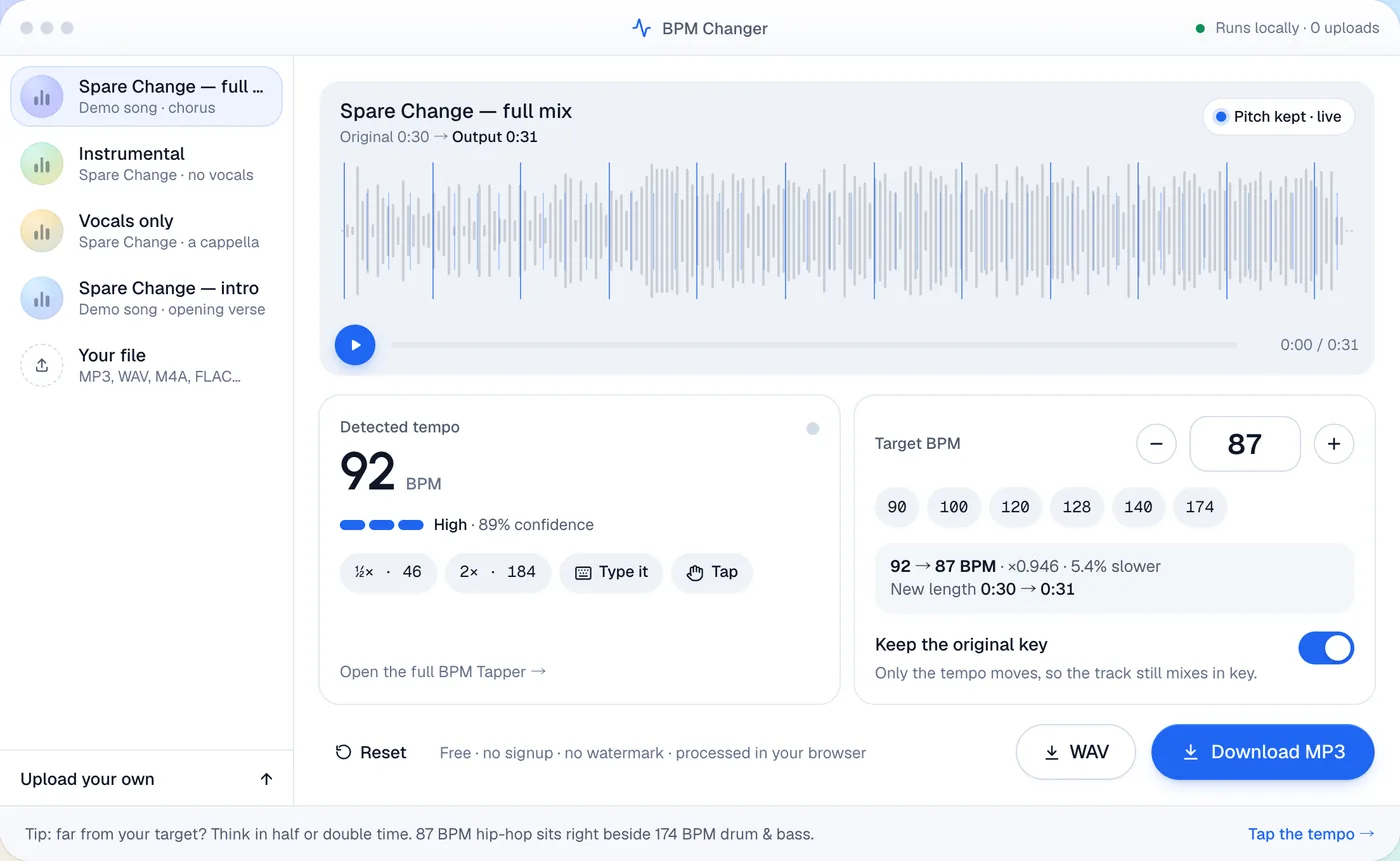
To change a track's tempo without chipmunk vocals, use the BPM Changer: it detects the current BPM, retimes the audio to your target and keeps the original key, so a 92 BPM beat becomes an 87 BPM one that rides under any 174 tune.
Producing at 174: quick notes
If you're starting a track rather than mixing one, a few habits make the tempo work for you:
- Set the project to 174 first. Changing tempo halfway through means re-stretching every sample and bounce.
- Program the two-step, then strip it. Write kick-snare-kick-snare, add ghost snares and shuffled hats, then try deleting the beat-2 snare: if the drop suddenly feels heavier, you've found a half-time section.
- Stretch breaks to fit, don't speed them up. A classic break recorded at about 110–140 BPM sounds thin when simply sped up; time-stretch or slice it so each hit keeps its weight.
- Let the bass breathe at 87. Write bass phrases in half notes and whole notes — the drums already provide the speed.
- Arrange in 16s and 32s. A 32-bar intro and outro give DJs room to mix your track in and out cleanly.
New to tempo in general? Start with what BPM means in music, then come back here for the drum & bass specifics.