440 → 432 · keep tempo
A 440.3 → 432.2A full mix, measured before and after
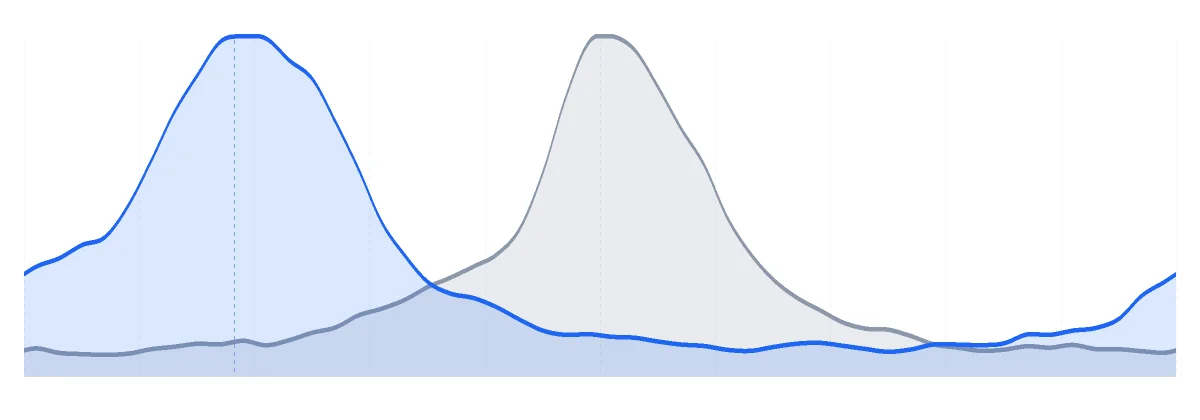
The song measured A ≈ 440.3 Hz. After converting, the same measurement reads A ≈ 432.2 Hz: the whole curve slides 31.77 cents to the left.
0:00 / 0:30
Free · runs in your browser
Spare Change — full mix
From · A4
440Hz
To · A4
432Hz
Pitch shift with time-stretching: same length, same beat.
Measured tuning
A ≈ 440.3 Hz
+1.1 cents from 440
Assumes the track is at exactly 440 Hz.
Free · no signup · no watermark · processed in your browser
Examples
Every clip was converted by this 432 Hz converter and plays live. Grey is the original, blue the converted version; the charts come from the converter's own tuning measurement.
The song measured A ≈ 440.3 Hz. After converting, the same measurement reads A ≈ 432.2 Hz: the whole curve slides 31.77 cents to the left.

Each harmonic of the sung note drops by 1.8%: about 6 Hz at 330 Hz and 12 Hz at 660 Hz. That is why higher partials split further apart.

The instrumental played 1.8% slower, like a turntable: no time-stretching at all, and the 30.0 s clip becomes 30.6 s.
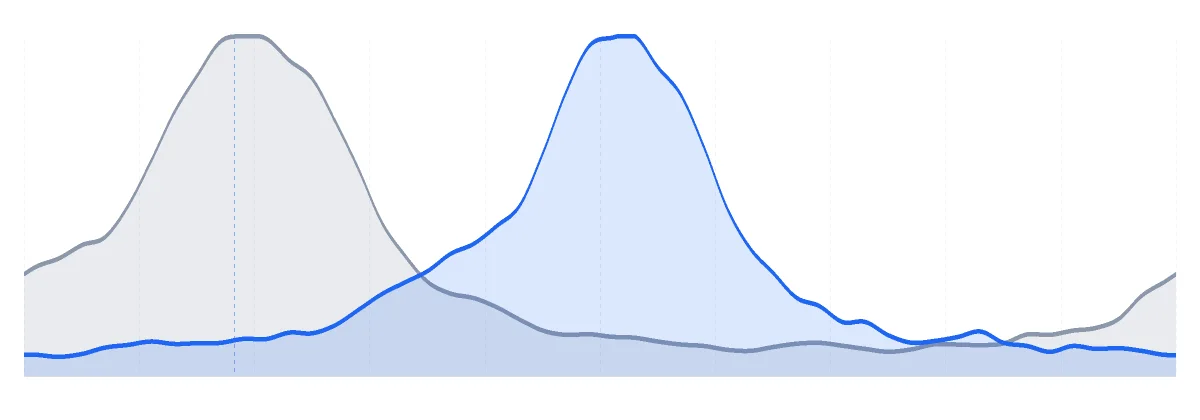
Start from a 432 Hz file and convert it the other way: the measured reference returns to A ≈ 440.2 Hz.
How it works
Three steps with the 432 Hz converter, all in your browser. Nothing is uploaded, and the original file is never changed.
Drop an MP3, WAV, M4A, FLAC or OGG up to 50 MB (500 MB with Pro), or start with a demo. Its tuning is measured straight away.
440 → 432 Hz, 432 → 440 Hz or any other reference, with the tempo kept or the tape method.
Flip A/B or take the blind test, then save the full track as MP3 192 kbps (320 with Pro) or WAV.
The numbers
432 Hz tuning means the A above middle C vibrates 432 times a second instead of 440. Every other note follows by the same ratio.
432 ÷ 440 = 0.98182. The 432 Hz converter multiplies every frequency in the song by that number, which is 31.77 cents, or 1.8%.
432 / 440 = 0.981818
1200 × log2(0.981818) = −31.77 ¢
3:30 × 440/432 = 3:33.9
Middle C at A = 432 is 256.87 Hz, close to but not the same as the “scientific pitch” of C = 256 Hz (A ≈ 430.5 Hz).
| Note | A = 440 | A = 432 | Change |
|---|---|---|---|
| C4 | 261.63 Hz | 256.87 Hz | −4.76 Hz |
| E4 | 329.63 Hz | 323.63 Hz | −5.99 Hz |
| G4 | 392.00 Hz | 384.87 Hz | −7.13 Hz |
| A4 | 440.00 Hz | 432.00 Hz | −8.00 Hz |
| C5 | 523.25 Hz | 513.74 Hz | −9.51 Hz |
Who uses it
People reach for a 432 Hz converter for very different reasons. A few of the common ones:

Some people simply prefer how their library sounds at 432 Hz and keep a playlist in that tuning.
Playing along with a 432 Hz recording? Convert it to 440 instead of retuning a piano or a whole band.

Deliver a 440 and a 432 version of the same master without re-recording anything.
Teachers who prefer 432 Hz can put a whole class playlist in one tuning.
History and claims
The 432 Hz vs 440 Hz debate is mostly about taste and history. Here is what is documented, and what is claimed.
Before 1850
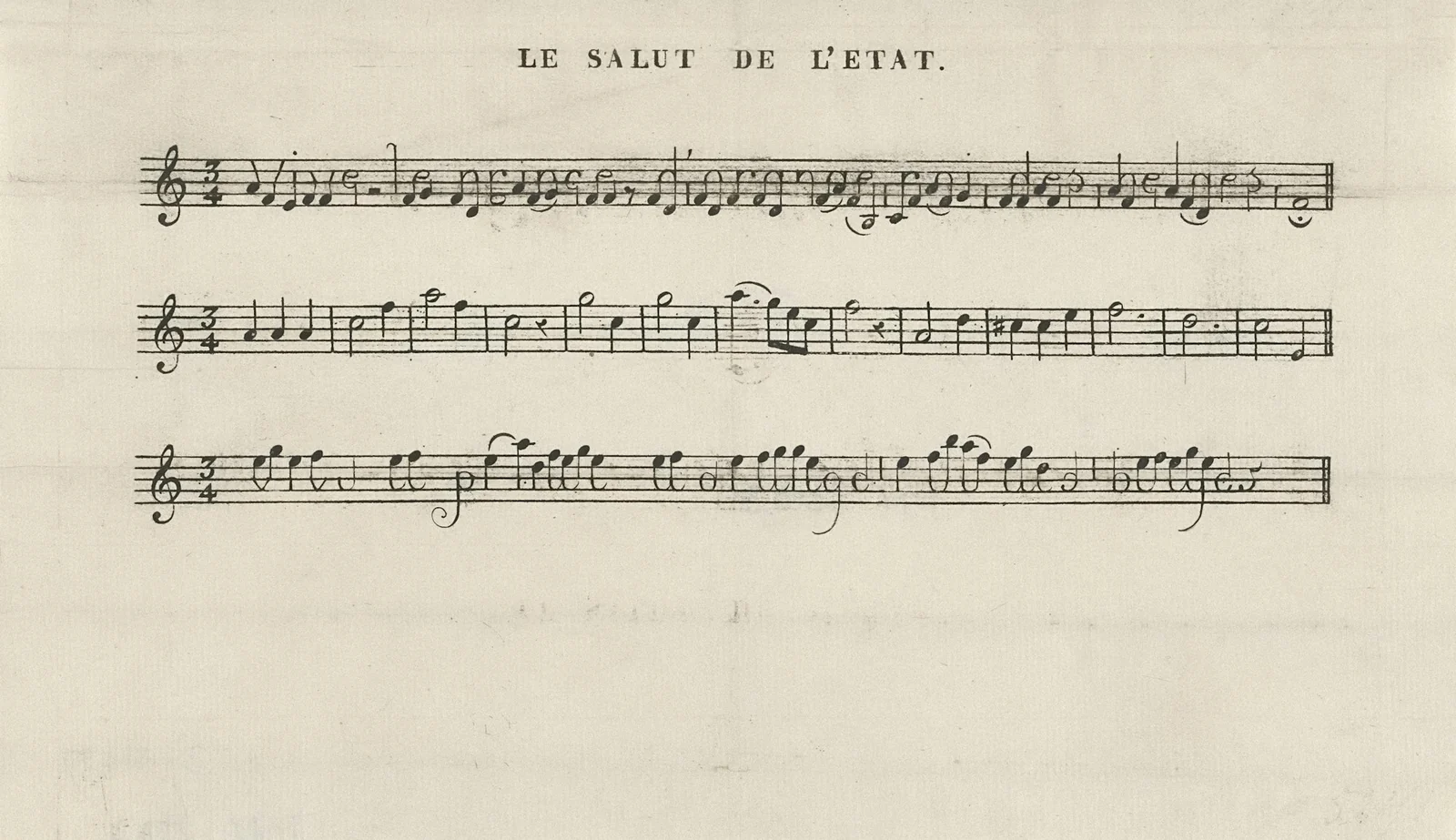
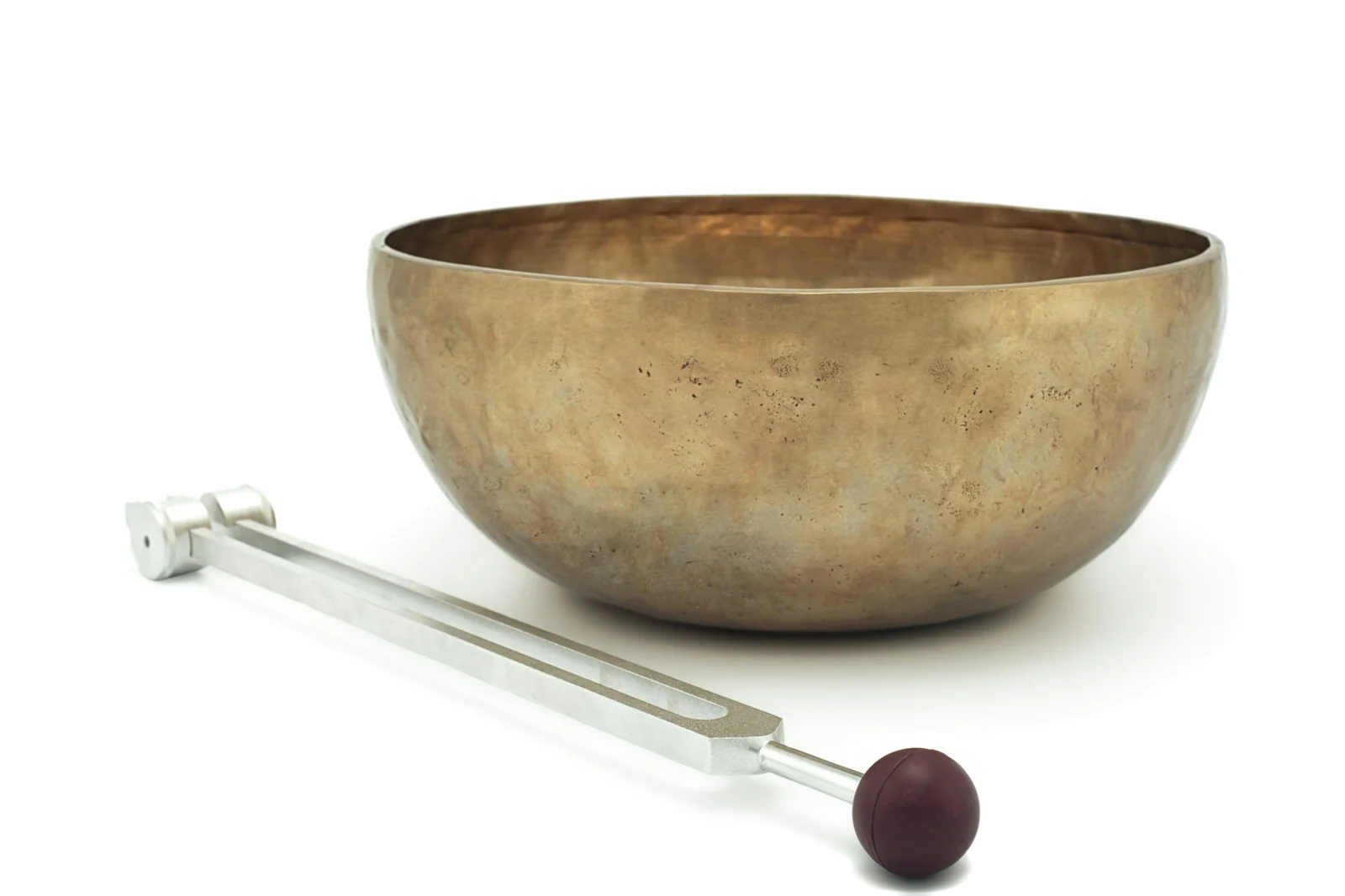
No common pitch. Organs and tuning forks across Europe put A anywhere from roughly 400 to above 450 Hz.
1859
France fixes the “diapason normal” at A = 435 Hz by law, and much of Europe follows.
1939
An international conference in London recommends A = 440 Hz, so instruments made in different countries can play together.
1955 · 1975
ISO 16 makes A = 440 Hz the standard tuning frequency, and confirms it in 1975.
Today
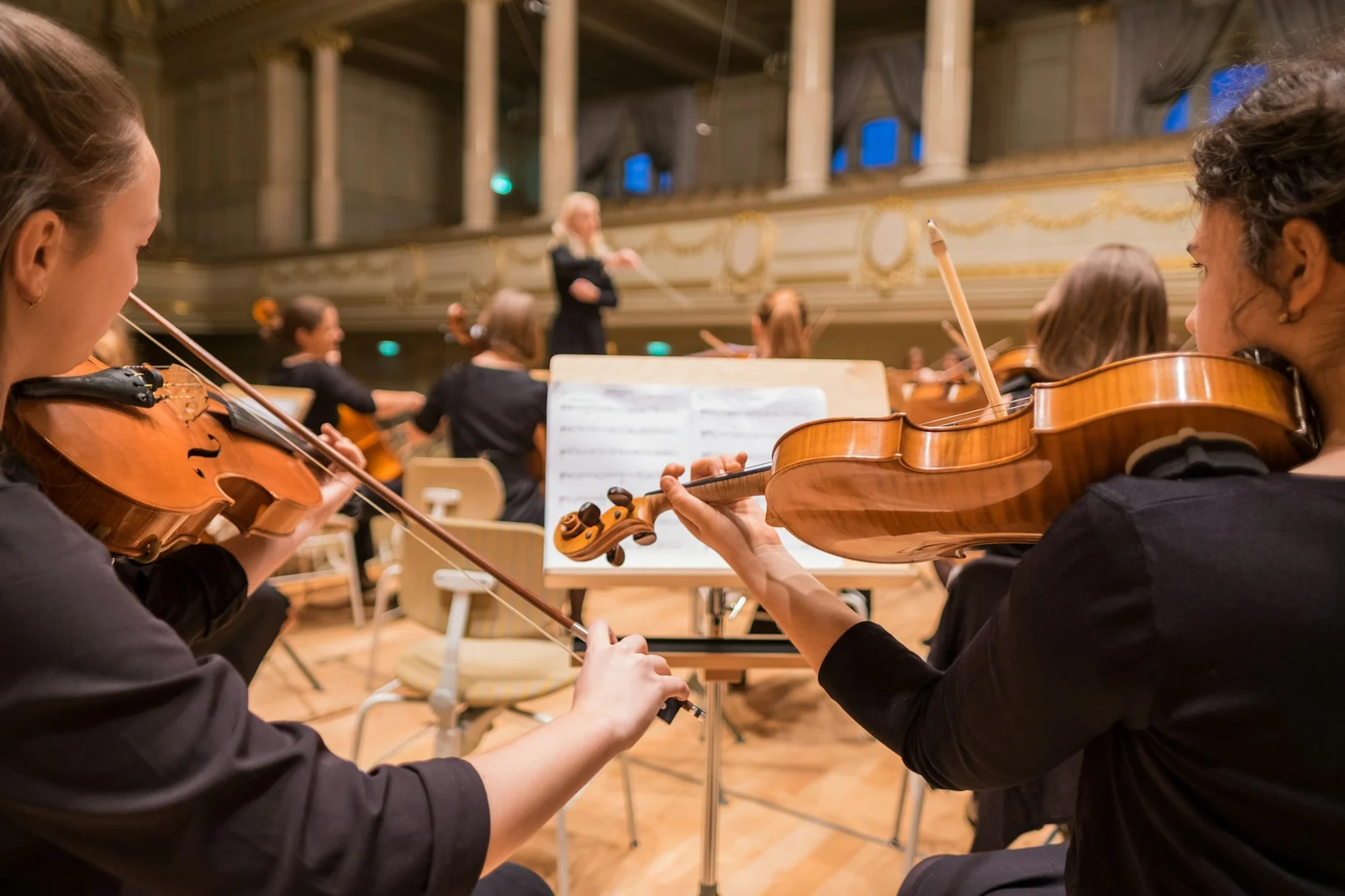
Most tuners default to 440 Hz. Many orchestras tune a little higher, around 442 Hz, and baroque groups often use 415 Hz.
That 432 Hz sounds warmer, calmer or more natural, and that it fits patterns found in mathematics or nature. Some also say 440 Hz was chosen for hidden reasons.
The gap is 31.77 cents, smaller than the spread between many recordings. A few small studies exist, but no large controlled research shows health effects, and the 440 Hz standard has a documented, practical history. Liking it is reason enough; the blind test lets you check your own ears.
Blind test| A = 440 Hz | A = 432 Hz | |
|---|---|---|
| Status | International standard (ISO 16) | Alternative tuning, popular online |
| Middle C | 261.63 Hz | 256.87 Hz |
| Difference | Reference | −31.77 cents (−1.8%) |
| Instruments and tuners | Default almost everywhere | Most tuners can be set to 432 |
FAQ
It lowers every frequency in a recording by the ratio 432/440, so a song tuned to A = 440 Hz plays as if it had been tuned to A = 432 Hz: 31.77 cents lower, about a third of a semitone. With Keep tempo on, the length and the beat stay exactly the same.
There is no strong scientific evidence for that. A few small studies have looked at it, but none is large or conclusive enough to show health benefits. Many people simply like how it sounds, which is a fine reason to use it. Try the blind test and decide for yourself.
Yes. Choose 432 → 440 Hz and the converter raises the track by 31.77 cents, which helps when you want to play along on an instrument tuned to the standard pitch.
Not every recording sits exactly on A = 440 Hz. Older records, live bands and some uploads are a few cents sharp or flat. The converter estimates the track's own reference from its strongest partials; turn on “Start from measured tuning” to land exactly on 432 Hz.
Keep tempo shifts the pitch and time-stretches the audio back, so the song stays the same length, which is best for DJ sets and videos. The tape method simply plays the audio 1.8% slower, like a turntable: nothing is stretched, but a 3:30 song becomes 3:34.
It is free, with no account and no watermark. Measuring, converting and encoding all happen in your browser, so your music never leaves your device.
Convert any song in a few seconds, compare it with the original and keep the version you like.